There's a lot of misinformation online when it comes to SEO. It seems that over the past few years, everyone has become an 'SEO expert'.
One of the most common problems that I hear from people looking to learn more about SEO is that they don't know what information to trust.
This is a valid concern. I always recommend that you test out anything you read online yourself before validating it as a good idea.
I'm going to share some of my most effective SEO tips that I've used within all kinds of campaigns to increase organic search traffic. This ranges from small businesses and startups through to multinational public companies.
One thing that I'll guarantee is that there will be an absolute minimum of one new SEO technique that you'll learn and be able to implement straight away.
 |
| SEO-Tips-to-Increase-Website-Traffic |
Quick Jump Menu Contents list
- Rank in the Featured Snippet
- Link Reclamation
- Community Hijacking
- Acquiring an Existing Website
- Boost Underperforming Content
- Competitor Link Analysis
- Questions From Your Buyer Persona
- Transcribe Your Video Content
- Get a Column
- Republishing Old Content
- Run Co-Marketing Campaigns
- Consolidate Cannibalising Content
- Link to Influencers
- Build a Linkable Asset
- Press Request Alerts
- Expert Roundups
- Topic Clusters
- Seeding Promotion of Big Content
- Influencer Platforms
1. Rank Content in Google's Featured Snippet
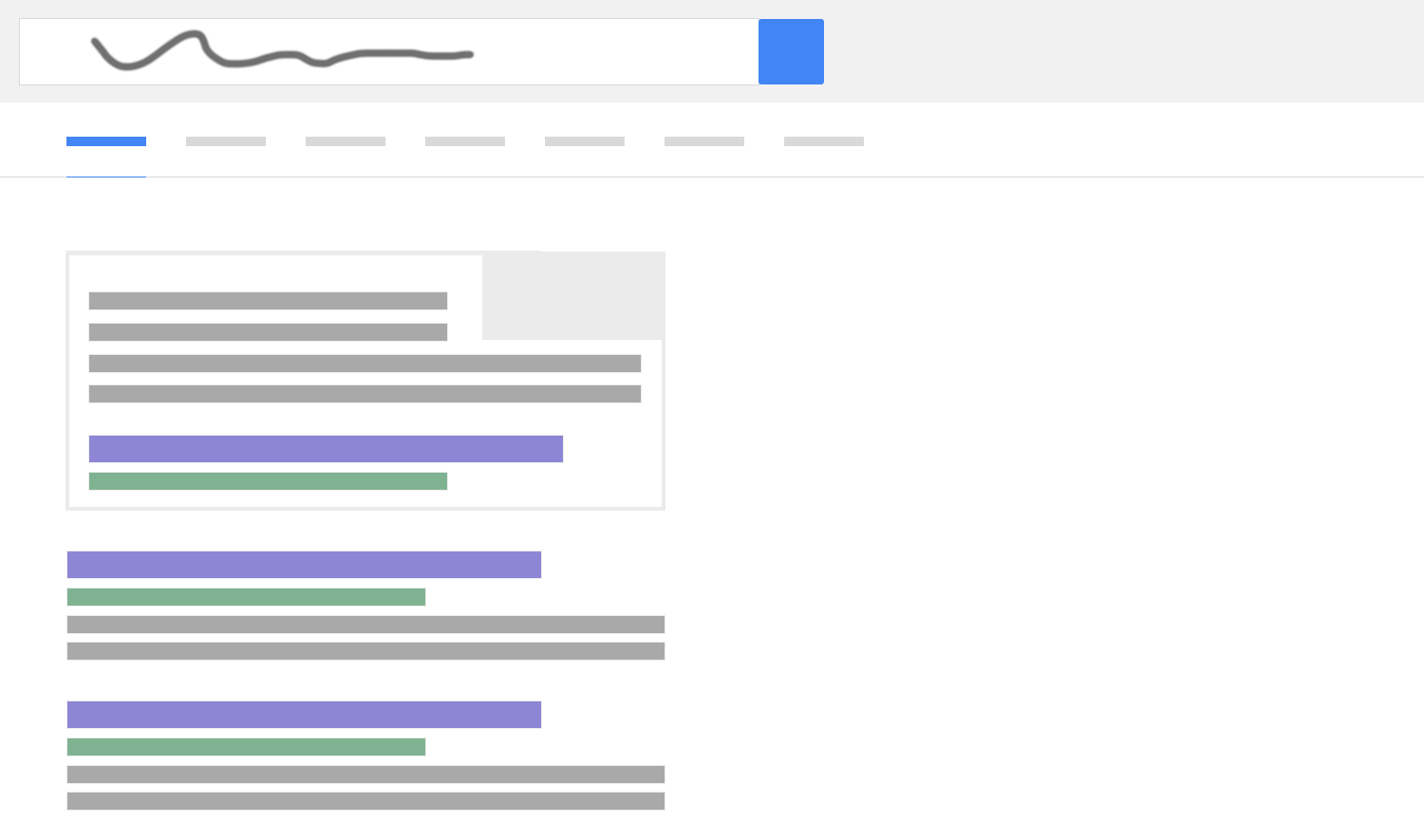
You may have come across the
Featured Snippet within the search results on a number of occasions. It's appearing more and more frequently for question-based keywords, for example, "
how to create a graph in excel".
The Featured Snippet section appearing inside the first page of Google is an incredibly important section to have your content placed within. I did
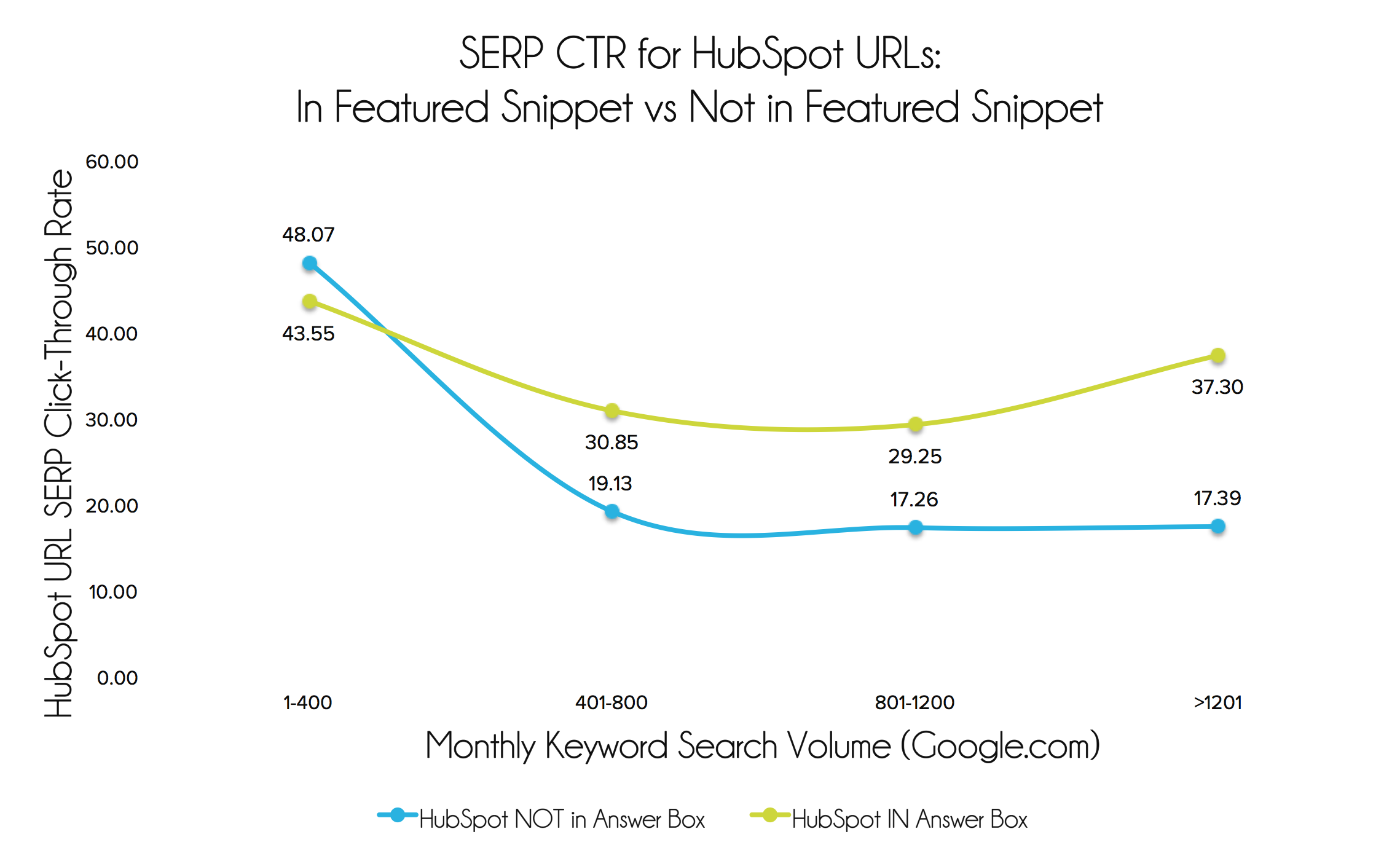
a study of over 5,000 keywords where HubSpot.com ranked on page 1 and there was a Featured Snippet being displayed. What I found was that when HubSpot.com was ranking in the Featured Snippet, the average click-through rate to the website increased by over 114%.
I spent a lot of time studying the factors that contribute highly towards ranking within the Featured Snippet. What I found was as follows:
Links don't matter that much for ranking in the Featured Snippet when you already rank on page one of Google.
You should aim to have the target search keyword within one of the HTML headers in your content (e.g. H2, H3, etc.).
Directly beneath the header that contains the target keyword, you should write the answer to the question, keeping it between 54–58 words in length.
Google doesn't always include a whole paragraph of text in the Featured Snippet. If you add "Step 1," "Step 2," "Step 3," etc. to the start of each HTML heading within your content (for example, within your H2 tags), Google will sometimes just list out your headings within the Featured Snippet. I've started to see this happen more and more in keywords beginning with "how to".
For shorter, less question-orientated keywords; for example, "
Content Marketing", Google frequently pulls through a paragraph of text as opposed to a step-by-step section. With these keywords, pay close attention to the structure of your page.
Google tends to prefer Featured Snippet content that begin logically as an answer would. For example, the answer will begin with, "Start by", "The first step is", etc.
You can use a tool like SEMrush to find different keywords that you rank for where there is a Featured Snippet. Here's
a good guide from Glenn Gabe that will show you exactly how to do that.
Once you find a load of Featured Snippet opportunities, go through your existing content and just update it to adhere to the rules that I outlined above. You should then start seeing some improvements over the coming few weeks, especially if you already rank in the top 5 results on page 1.
2. Link Reclamation
How effective this SEO technique is will vary depending on your type of business.
For large brands, this tactic alone can bring through thousands of new links with relatively little effort. That said, you don't need to be a big brand for this to get you some results.
In short, this tactic is all about finding when someone has mentioned you, your business, your product/service or your content without actually linking to you. Once you find someone that's done this you can then get in touch with them and simply request that they add a link to your website.
Sounds simple, right? Well, it is! The conversion rate and return on your time here is surprisingly high.
We do this on a regular basis at HubSpot, and I've also done this within countless projects I've worked on. Here's my process for scaling it:
Step 1: Monitor Brand Mentions
The first step in the process is to actually find out when you're being mentioned online.
My favourite tool of choice (and it has a free version) is
Mention (you can also use
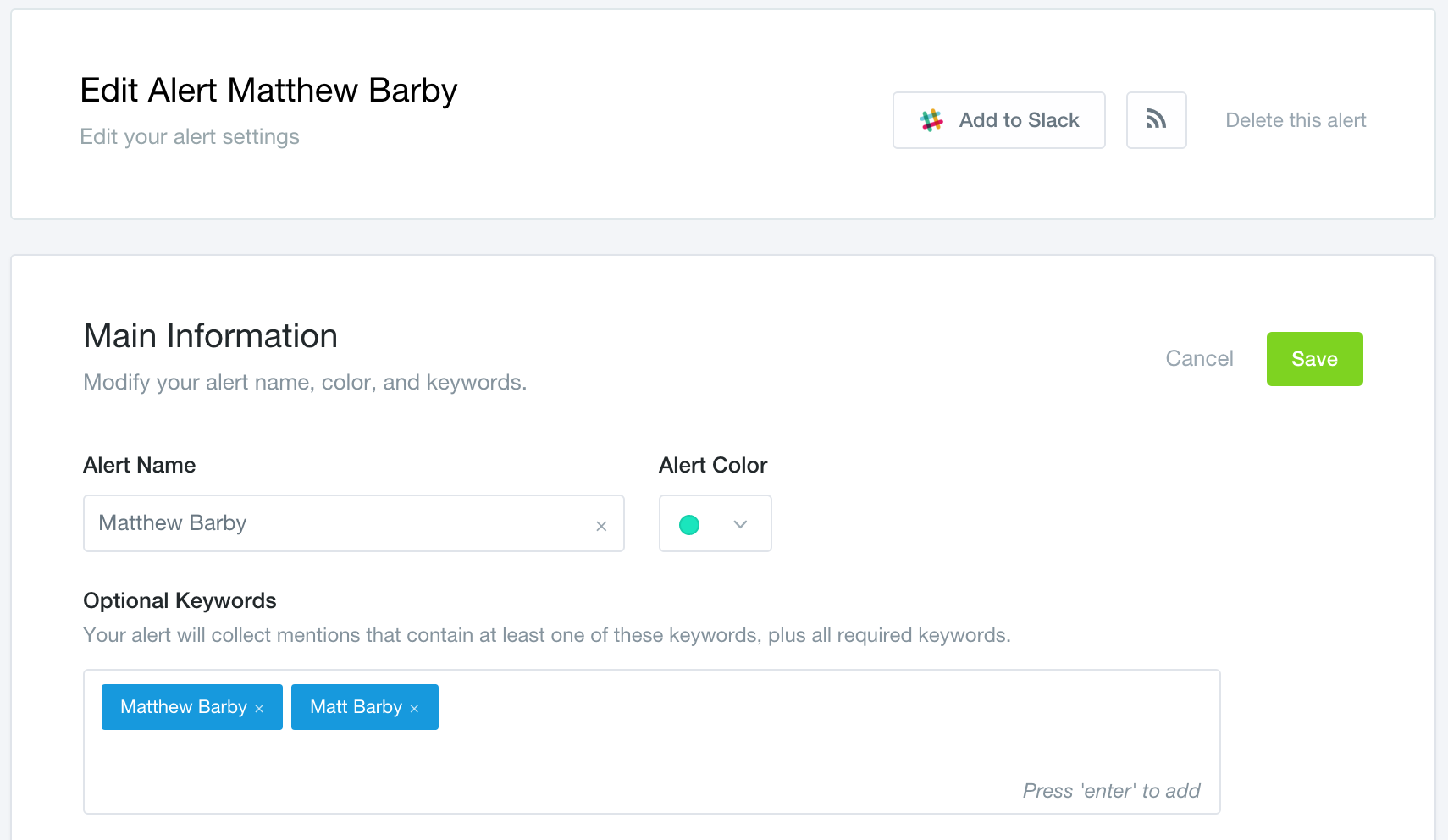
BuzzSumo for this). You can quickly set up alerts by adding any keywords related to your brand or products (I'd recommend separating these out).
Make sure that you exclude any mentions from your own website within the alert. You can do this within the settings.
Step 2: Set up Daily Email Alerts
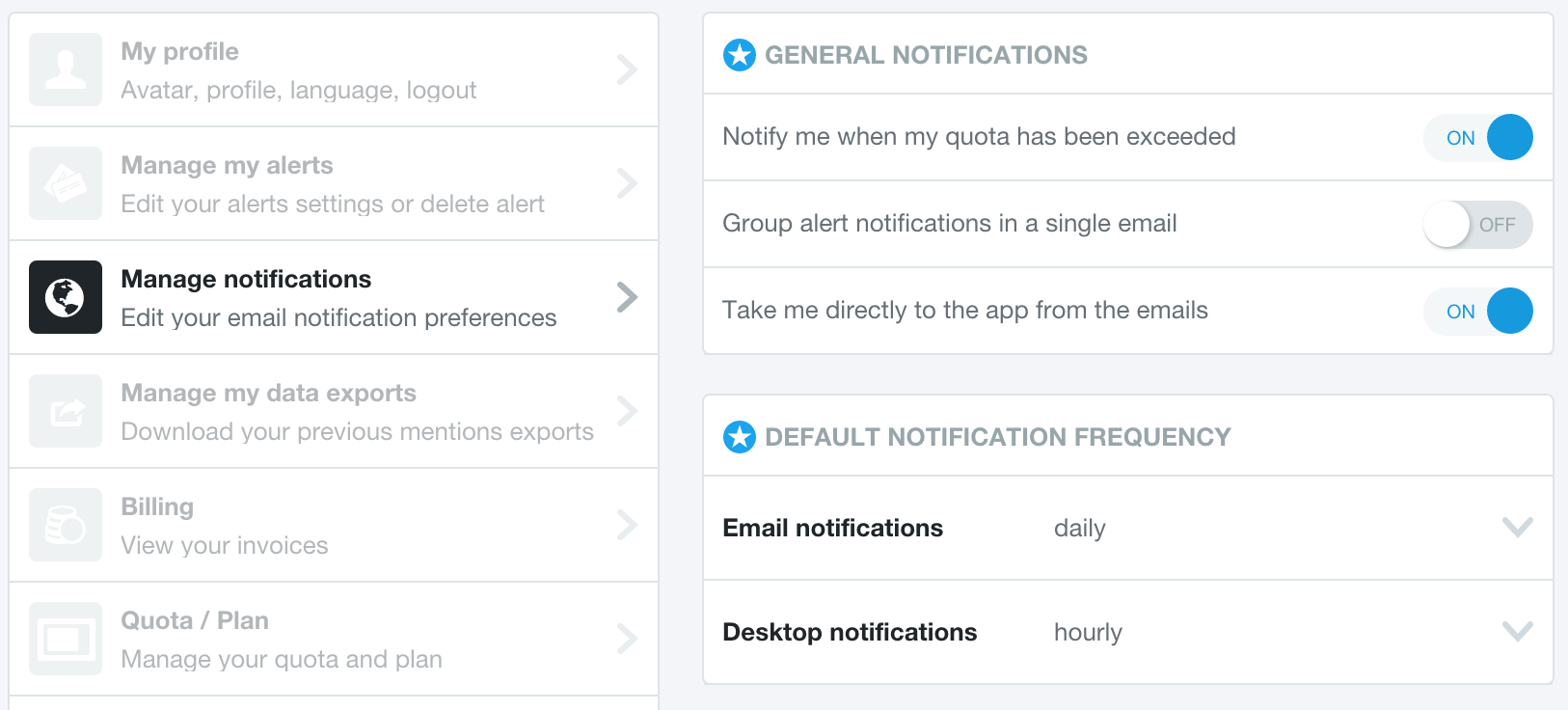
Once you've set up an alert within Mention, go to your settings and then 'Manage Notifications'. From here you can select the option to get a daily digest email of any mentions (I'd recommend doing this). You also have the option of getting desktop alerts - I personally find them annoying, but if you really want to stay on the ball then they could be a good idea.
Step 3: Checking for Links
There are ways to do a bulk search on a list of URLs to check if any of the pages contain a link to yours, but if you're checking this on a daily basis, it's probably just as fast to do a quick manual check.
If you do want to perform a bulk check then you can use the
SEO Tools Plugin for Excel.
To speed up the manual checking process, go to each webpage, right-click and then select 'View Page Source'. Once you're viewing the source code, you can run a quick search within your web browser (CMD+F or CTRL+F) and search for your domain name. If it doesn't appear in the HTML of the webpage then they haven't linked to you.
These are the opportunities that you're looking for.
Step 4: Gathering Contact Details
Once you've identified an opportunity, you'll want to find a way of getting in touch with the website owner or author (best the author if you can) to request that they update the mention of you/your brand.
The contact or 'about us' page is your best starting place, but if they don't list an email address or have a contact form, you may want to follow some of the tips for
finding email addresses here.
Step 5: Reaching Out
If you manage to get an email address from the website, you'll want to get in touch with them as soon as possible to add a link to their webpage. I've found that the nearer you do this to the date it was published, the higher the conversion rate.
Here's an example email template that you can use:
Hi {{FirstName}},
First of all, I'd like to thank you for mentioning {{Your Brand or Product Name}} within your recent article. It means a lot!
I noticed within the article that you didn't actually link through to our website when you mentioned us. Is there any chance that you can quickly update the post with a link? Here's the link to save you time searching for it: {{Link to Your HomePage or Product Page}}
Thanks in advance, and if you ever need any more info on {{Your Brand or Product Name}} then I'd be happy to supply you with it (imagery, video content, etc.).
Thanks again!
{{Your Signature}}
I would recommend that you use a tool like BuzzStream to manage the outreach process because you can save your email templates within their platform and test response rates, etc. You can also mark whether your outreach has been successful for each of the websites you reach out to.
Download My SEO Tactics Checklist + BONUS Tools
Get my downloadable checklist with 19 SEO tactics that you can implement today as well as a full bonus list of all the tools that I use to accelerate growth within my SEO campaigns.
Download for Free
3. Community Hijacking
When it comes to traffic generation and
link building, this is one of my favourite techniques. It works better in some industries over others, but in one way or another you'll be able to take advantage of this approach.
Community hijacking involves finding online communities that are made up of your target market, or people that can reach your target market so that you can build a relationship with them and get them to promote your content/brand/product(s).
Here are a few examples of this in action...
Example 1: Lookbook
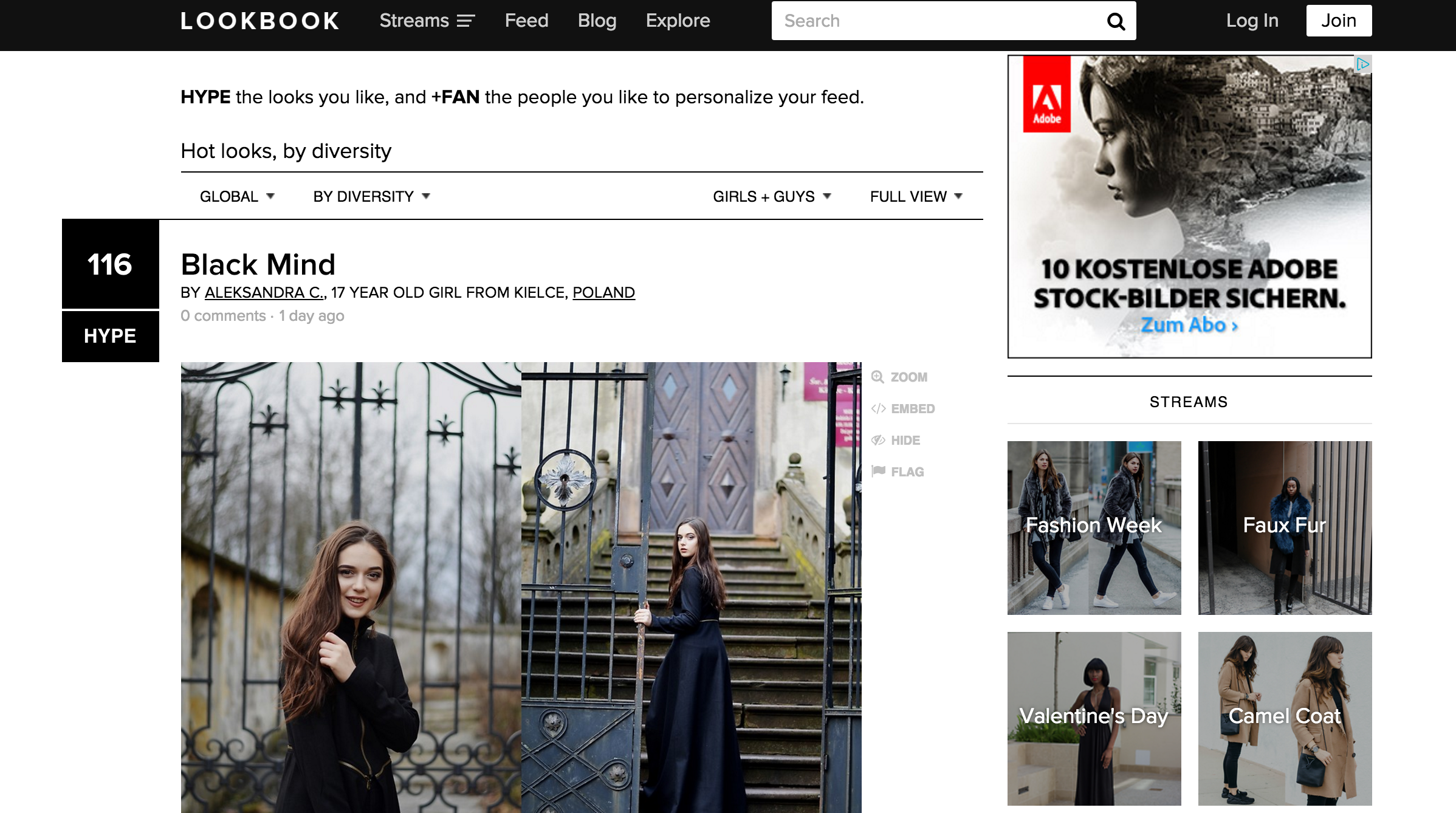
Lookbook.nu is an online community of fashion enthusiasts (over 1.2 million of them) that publish photographs of themselves in different outfits, mentioning each of the products that make up their outfit.
This community is full of opportunities if you're a fashion-based retailer. One of the major advantages is the fact that they add links to each of the products that they feature within their outfits - the links go directly to product pages. This is the holy grail for ecommerce SEO, and the traffic those links will bring through will convert at a very high rate.
The above image is an example of an outfit that a user has posted on Lookbook, with links to all of the products they're wearing (all of which pass on valuable PageRank).
As a brand, your goal is to get featured by some of the top users on the site. You can find out how popular a user is by checking out how many "Fans" they have as well as their "Karma" score - this is all publicly available on their profile page.
I ran a campaign targeting Lookbook users to form partnerships that consisted of giving them products to wear in return for them featuring the products on their Lookbook site. If you work with the right people, this will scale very well.
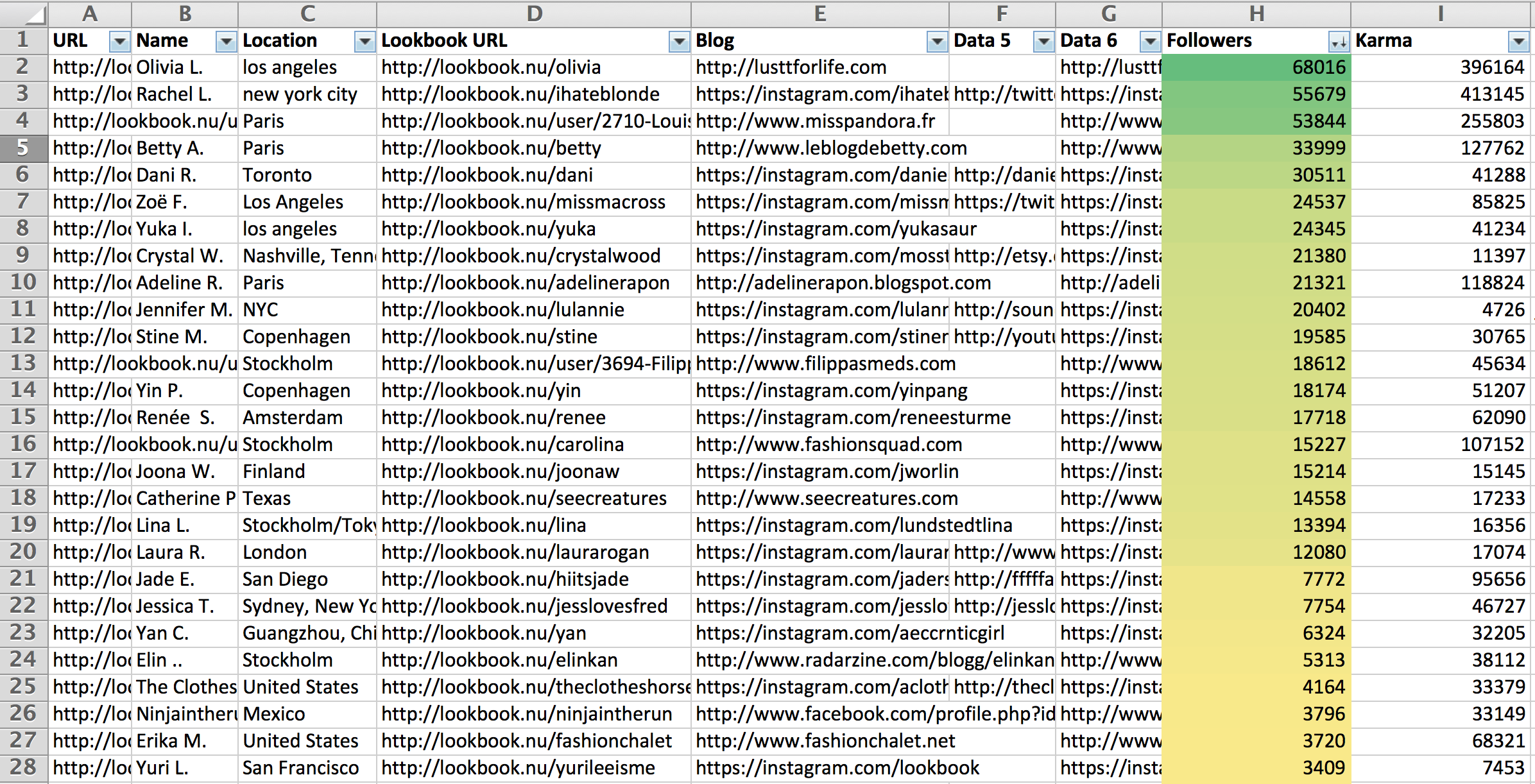
To find the right people I downloaded a list of some of the most popular users within the community. To do this, I used
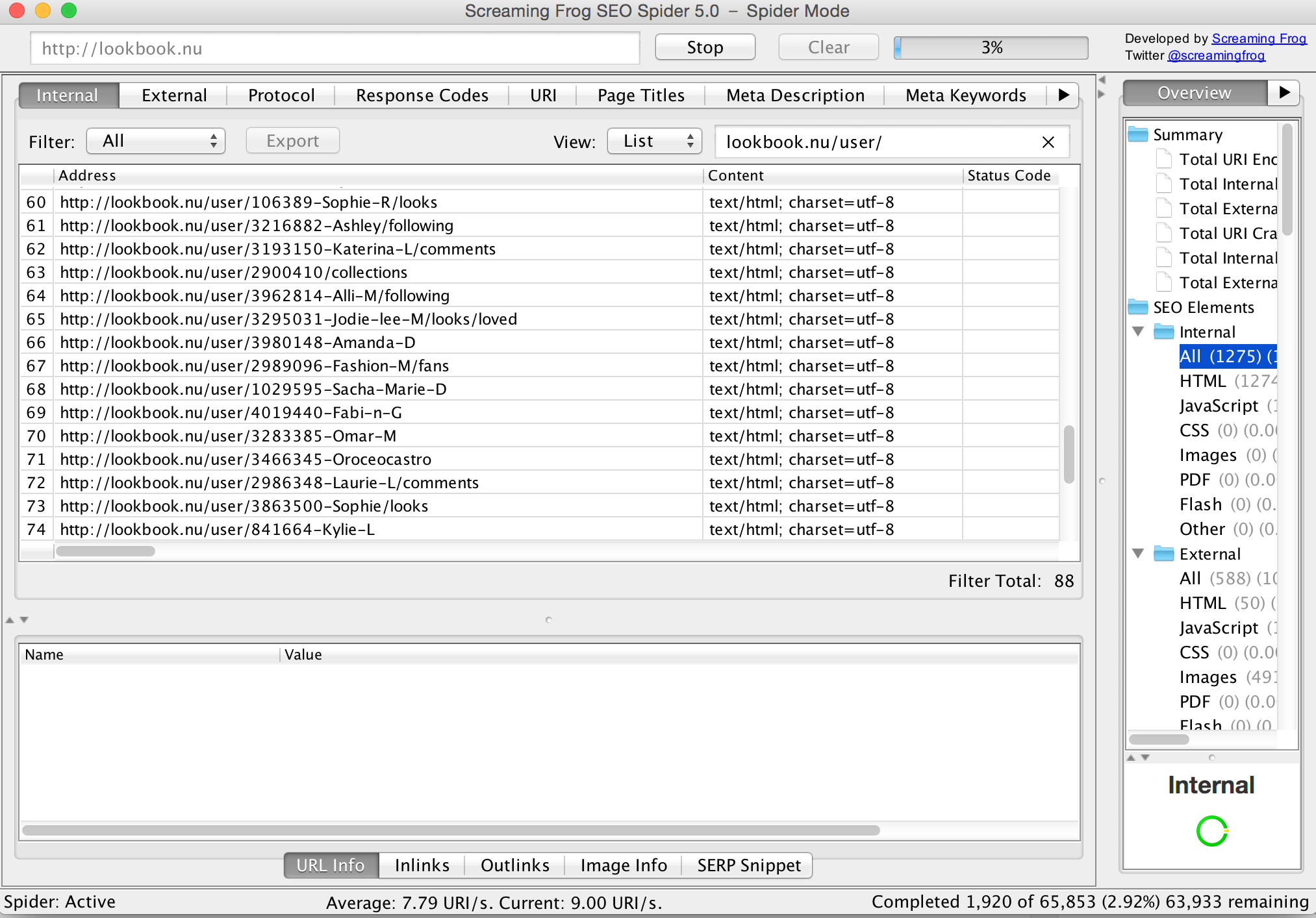
Screaming Frog SEO Spider to gather a list of all the URLs on the website. I then exported this list into an Excel spreadsheet and filtered the URLs to only show those that were user profile pages. I could do this because all of the profile pages had /user/ within the URL.\
Once I had this list, I could
use data scraping to extract information from each of the users' profile pages. For example:
Their full name.
Their location.
Their number of fans.
Their "Karma" score.
Their personal blog URL.
Their email address.
Their social media profiles.
Once I had this information I could sort the users from highest to lowest number of fans to find the most popular.
Where there was any data missing, I uploaded the user's personal blog into
BuzzStream to gather further information on them. This would give me a heap more email addresses that could be used for outreach.
To make things as cost effective as possible, I looked for users located as close to the business as possible (to save on shipping costs) and then stack-ranked them by number of fans. All that was left to do was to send them an email to see if they were interested in working with me.
Here's an example email template I used:
Hey {{First Name}},
I hope you're well.
My name's {{Your Name}} and I work for {{Your Company}}. We’re a {{Short Description of Your Company}}. We're currently working with awesome bloggers like yourself to get some photography done wearing our products.
I saw a few of your images on Lookbook.nu where you were wearing products that fit in with our brand (they looked amazing), so I thought I'd reach out to see if you'd be interested in styling out a look wearing one of our products?
We have a great range that you can check out here (you can choose any product you like): {{Link to Your Products}}
Ideally we'd love to get some shots of you styling out a fall look wearing one of our products which we can share across our social media and within our blog. Alongside this, we'd love if you could publish the look on your blog and on Lookbook.
If you're interested, let me know the following:
1. How much you'd charge (we'll throw in the free product as well).
2. When you'd be able to deliver the photography (roughly).
I look forward to hearing from you!
{{Email Signature}}
The response rate here was huge because this is a mutually beneficial relationship. The bloggers get free products to use within their outfits (as well as more clothes for their wardrobe!) and I was able to drive traffic through to my site, get high-quality backlinks, a load of social media engagement and some high-end photography to use within my own content and on product pages.
Not only that, but I found that the bloggers would also publish a post on their personal blog as well, doubling the amount of exposure we were getting.
Example 2: Product Hunt
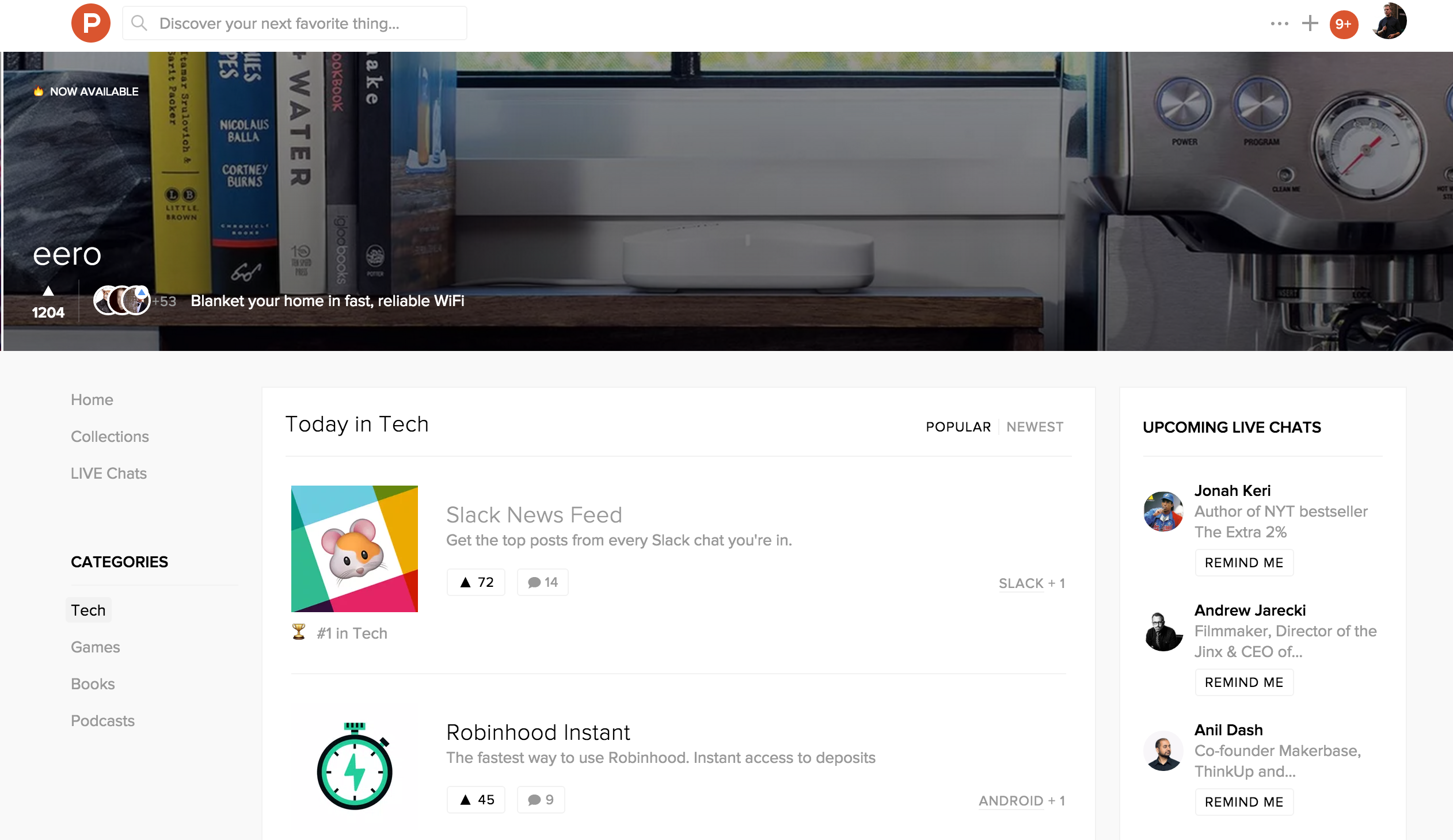
Product Hunt is a very different community to Lookbook, but it's a perfect example of a different kind of community hijacking that you can take advantage of.
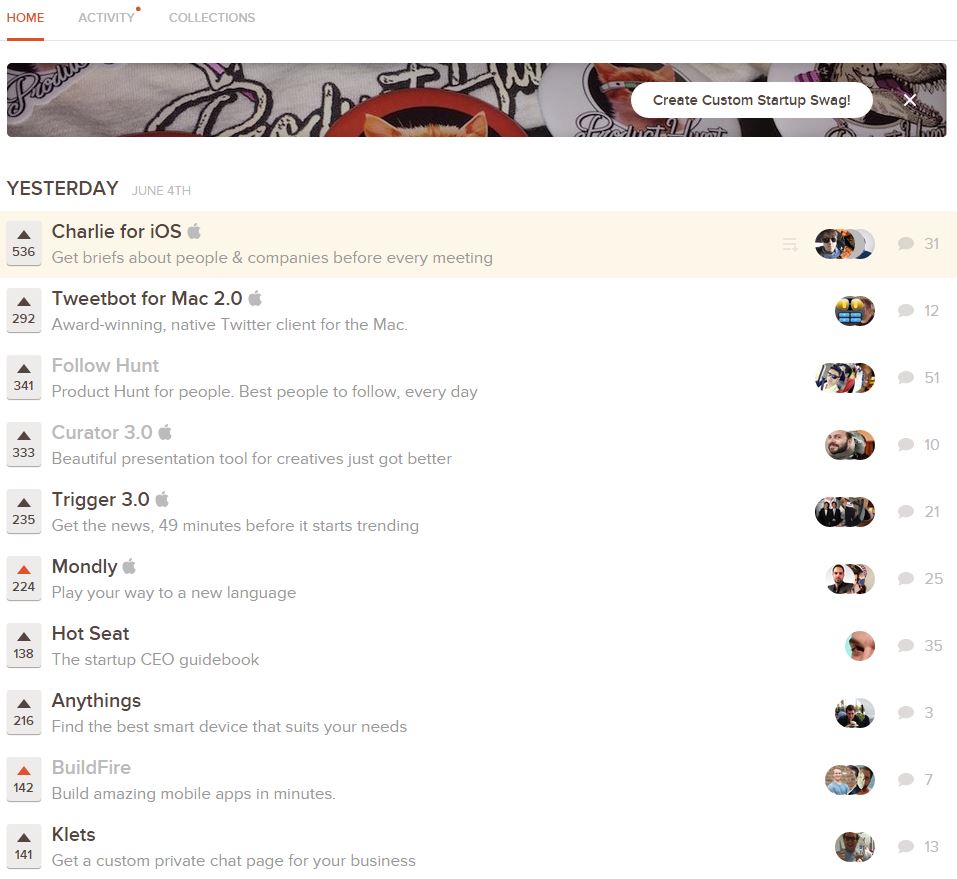
If you've never been on Product Hunt before, it's like a daily Reddit feed for new products. Products get submitted to the community and they're voted on. Each day products are stacked in descending order based on how many votes they've had. Ranking at the top of the daily list can result in thousands of conversion-focused traffic to your site, just as the creator of Nomad List
found out.
I worked on an
SEO campaign last year with a company called BuildFire and we managed to get them trending on Product Hunt, generating a few thousand visitors in one day and over 250 new customers.
Similarly with Lookbook, you're looking to get influential members within the community to
promote your product. This can involve having an influencer submit your product or getting a number of members to vote for you (ideally you'd do both).
Here's my process for getting featured on Product Hunt - it's the exact one that I used with BuildFire:
Getting Featured on Product Hunt
TAG: ACQUISITON
DIFFICULTY: MEDIUM
Unless you have an invite, you can’t comment or submit a new product to PH. Even then, if you were to submit yourself, the likelihood is that you’d miss out on a lot of traction compared to someone influential on PH submitting. You only get one chance to submit to Product Hunt so you’ll need to identify someone who would be interested in your startup that also has influence within the PH community. To do this, go to Twitter and search the following query in the search bar:via "on @producthunt" from:producthunt
This will display tweets from the @ProductHunt Twitter account that mention who has submitted a product (via that person’s Twitter account). All you need to do is search for a similar product to yours and then find the person who submitted it. This person will be perfect to submit yours.
Once you’ve got a PH member in mind, it’s time to reach out to them via Twitter to ask if you can drop them a quick email. It’s important not to just ask them to submit straight away – you’ll want to do something for them first.
Drop them an email that gives them a brief explanation of your product and get them on-board to test it. You may need to incentivise them somehow. For example, you could give them access for free.
Once you’ve built the relationship, ask them to submit your website to PH. You’ll want to set up a landing page URL to give them that has a specific discount/offer for PH members – this dramatically increases conversions and also helps to boost interest within PH.
Here’s an example of a website doing this.
As well as setting up a landing page for Product Hunt members, you may want to add a banner on your site that displays a discount or just links back to your PH listing (to encourage more voting). You can use
IntroBar (free) to set this up in a few minutes and only display to people coming from Product Hunt.
Once you’ve been submitted, you’ll want to ask the submitter to mark you as the Maker of the product so that you’re able to comment. If they have trouble, just drop @ProductHunt a tweet.
Once you’re able to comment, ask the PH community to give you honest feedback on your product and make sure you answer any question or comment as quickly as possible – this is what the PH community loves and it can provide some invaluable feedback for you.
Drop through a link to your Product Hunt listing to your social media followers and email subscribers to get them to engage in the comments and upvote.
Add a call-to-action on your website to visit the PH page so that people can upvote or comment – this could be a simple pop-up.
Getting a feature on Product Hunt doesn't just generate a load of short-term traffic; it can end up in you getting a ton of coverage on bigger publications and receiving a load of valuable backlinks. Off the back of Product Hunt launches I've seen sites featured in Entrepreneur, Tech Crunch, Huffington Post, Inc and many more.
4. Acquiring an Existing Website
This is one of the most underrated and least covered SEO techniques of all. Whenever people think about website acquisition they assume you have to be spending vast amounts of cash, but this just isn't the case. I've picked up sites for as little as $2,500, which is about how much you'd spend on one month within a modest SEO campaign.
When done right, the long-term return on investment of website acquisition is huge.
The major benefits of acquiring an existing website and migrating it into your own site are:
You'll absorb all of the traffic of the existing site.
You will bring in all of the links that the website had.
There will be a huge influx of new content to your website.
Their keyword rankings will now be your keyword rankings.
In some cases you can take over their social media accounts and mailing list subscribers.
You'll see a site-wide lift in your organic traffic.
These all sound pretty good right? I actually wrote
a case study of doing this with my own blog a couple of years ago that shows the effect.
How Much is a Website Worth?
The value of a website is often judged by the amount of revenue it generates on a monthly/annual basis. There are a lot of different ways to reach a fair selling price; one common valuation model is 2x net annual income. So let's say the website makes a net monthly income of $250; a rough valuation for the site could then be $6,000.
There are a lot of other factors that come into play here but this is a good starting point. If a mailing list is also being discussed then an additional 'per subscriber' fee could be bolted on. The same could be said with social media accounts.
The ideal purchase for a site in the region of $5-10k is going to have hyper-relevant content (the more specific to your buyer persona the better), will have between 10-20k monthly visitors and roughly 200-500 linking root domains. If the site is making little or no revenue then you're onto a winner.
Here's a really good
interview with Thomas Smale of FE International, a company that specialises in website sales. Within the interview, Thomas answers some common questions surrounding website sales, and I'd strongly recommend reading it if you're interested in learning more.
How to Find Acquisition Targets
This could be a whole blog post in itself, but here's a brief overview of the steps that I take to find acquisition targets. The ideal target for me is as follows:
The site has a sizeable amount of original content that's relevant to my buyer persona.
There is a good ratio of backlinks to linking root domains (I try to find sites with a max 20:1 ratio).
There is a good volume of linking root domains (this really depends on how many you're looking for).
The site currently brings in a steady flow of organic traffic each month (minimum 10,000 unique visitors).
There hasn't been any content published on the site in the past few months (which shows that the owner may be more open to selling).
There aren't a lot of ads on the site and there's nothing being directly sold from the site (this brings the value down).
Blogs are always a primary target for me because they often have relatively low levels of income and large volumes of content. This means that the owner is much more open to selling for a reasonable fee, and I will get a load of extra content that would have cost me a ton to create and even more to promote.
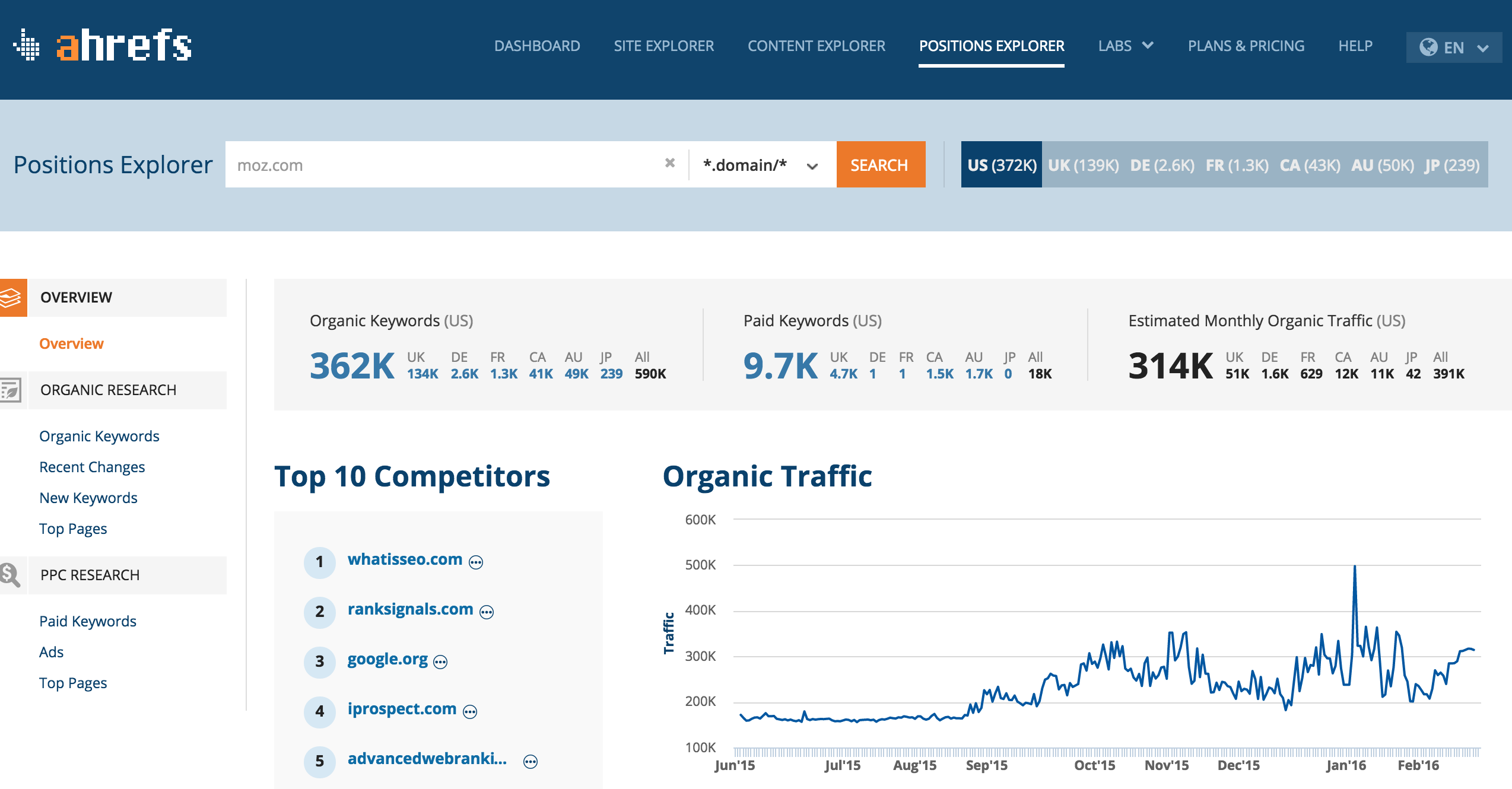
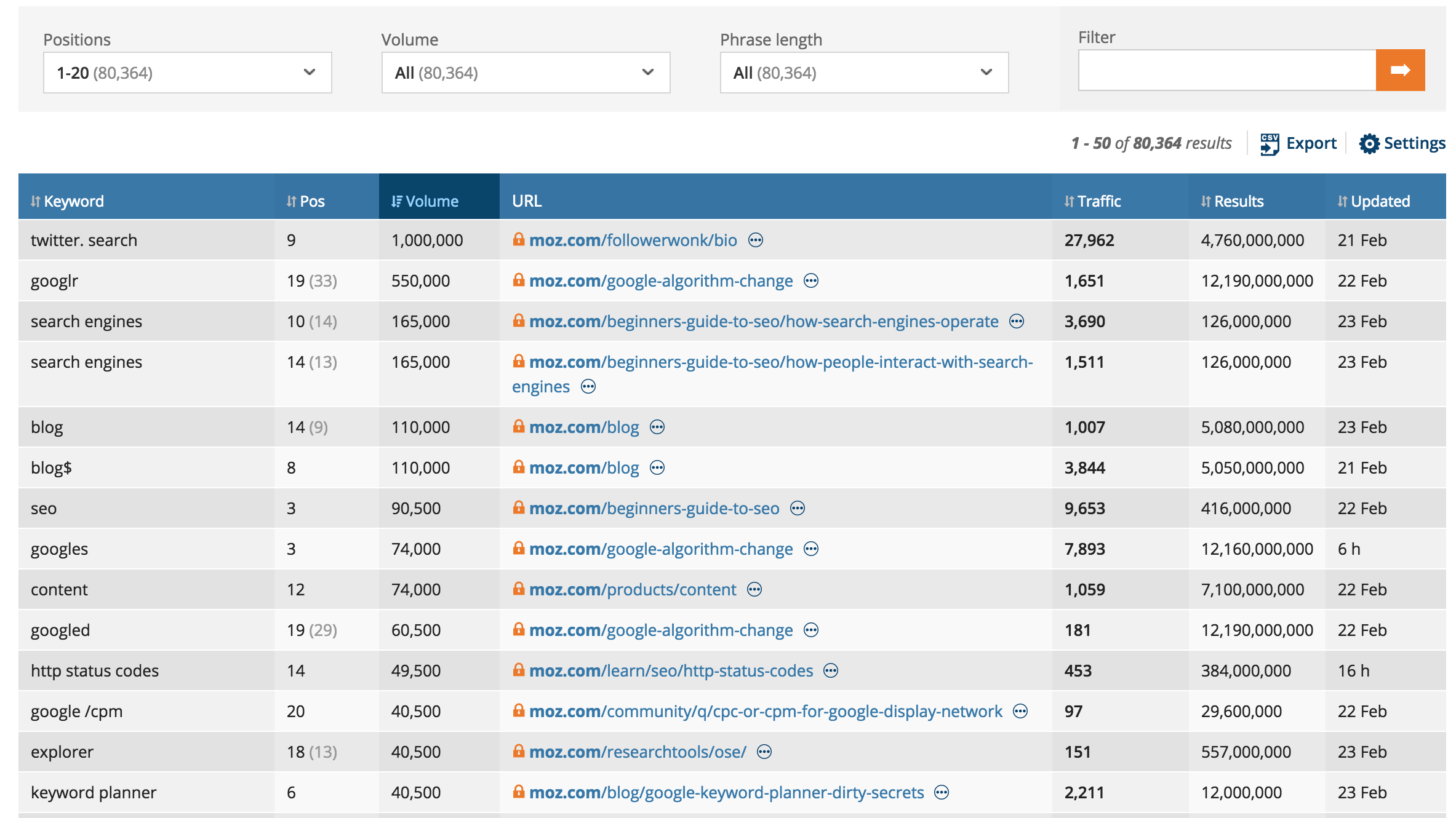
I tend to start by looking for some core keywords that I'm aiming to rank for. I'll check out sites ranking on the first two pages and then bring up their site in Ahref's
Position Explorer Tool.
You can go through and check out some of the keywords that their site ranks for as well as getting a rough idea of their monthly organic traffic.

This helps you to understand the potential of the website. If you combine this with the data that
SEMrush and
SimilarWeb has, you'll be able to get a well-rounded view of the website's overall performance.
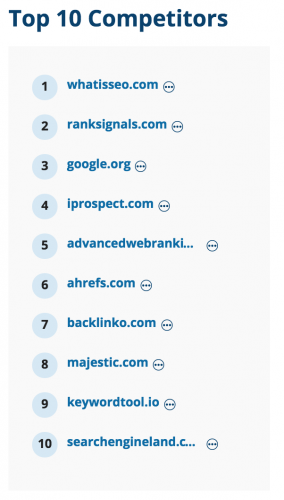
Another tip I have is to check out the list of "Top 10 Competitors" to find a load of other relevant websites that rank for similar keywords.
What to Do Once You've Acquired a Website
Once you've acquired a website, the next step is to port all of their content into your existing website and then 301 redirect everything over.
All of the backlinks will be passed through to you and Google should reindex the new pages over the following few weeks.
For a more detailed look at the technical process involved, check out
my guide here.
MMOkits.com is website about Make Money Online, tips SEO, tips keyword research, Content marketing, Search Engines, keywords, keyword rankings, etc.
5. Boost Underperforming Content
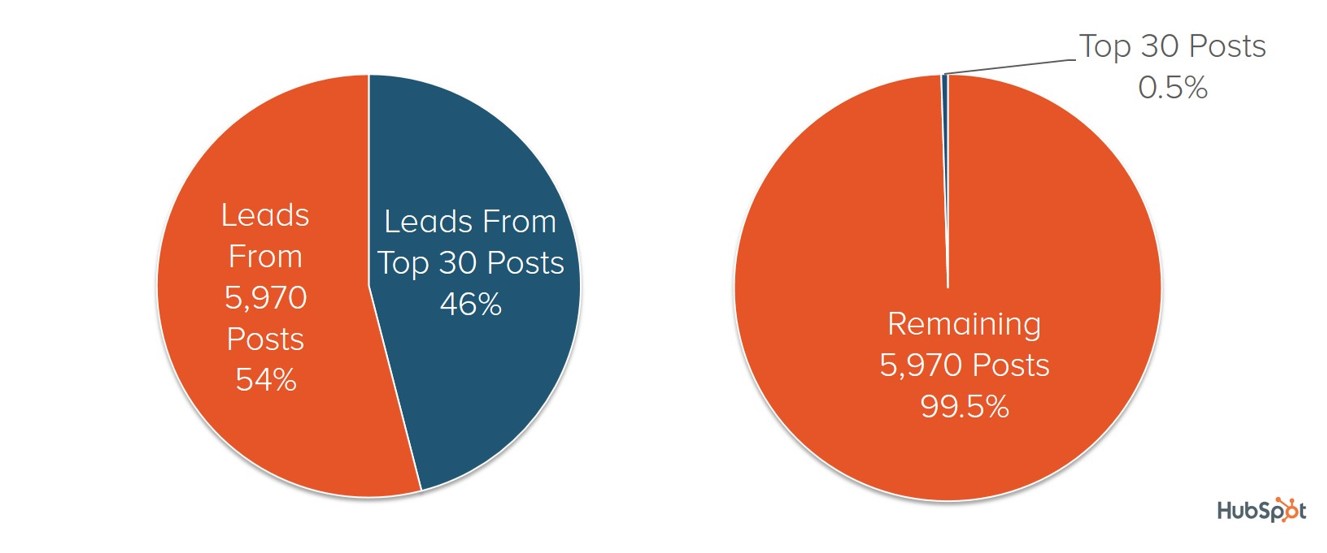
It's no secret that a large percentage of most sites' organic traffic and leads comes from a small percentage of the total content on the site.
This is certainly the case at HubSpot, and it's been a similar case on most projects that I've worked on in the past.
With this comes a lot of opportunity, even if you don't see it immediately.
You'll often have a bunch of content that is ranking on page 2/3 for keywords that they're targeting, and these make for great 'low-hanging fruit' projects.
Step 1: Finding the 'Low-Hanging Fruit'
Open up
Google Search Console and then navigate to the "Search Analytics" report.
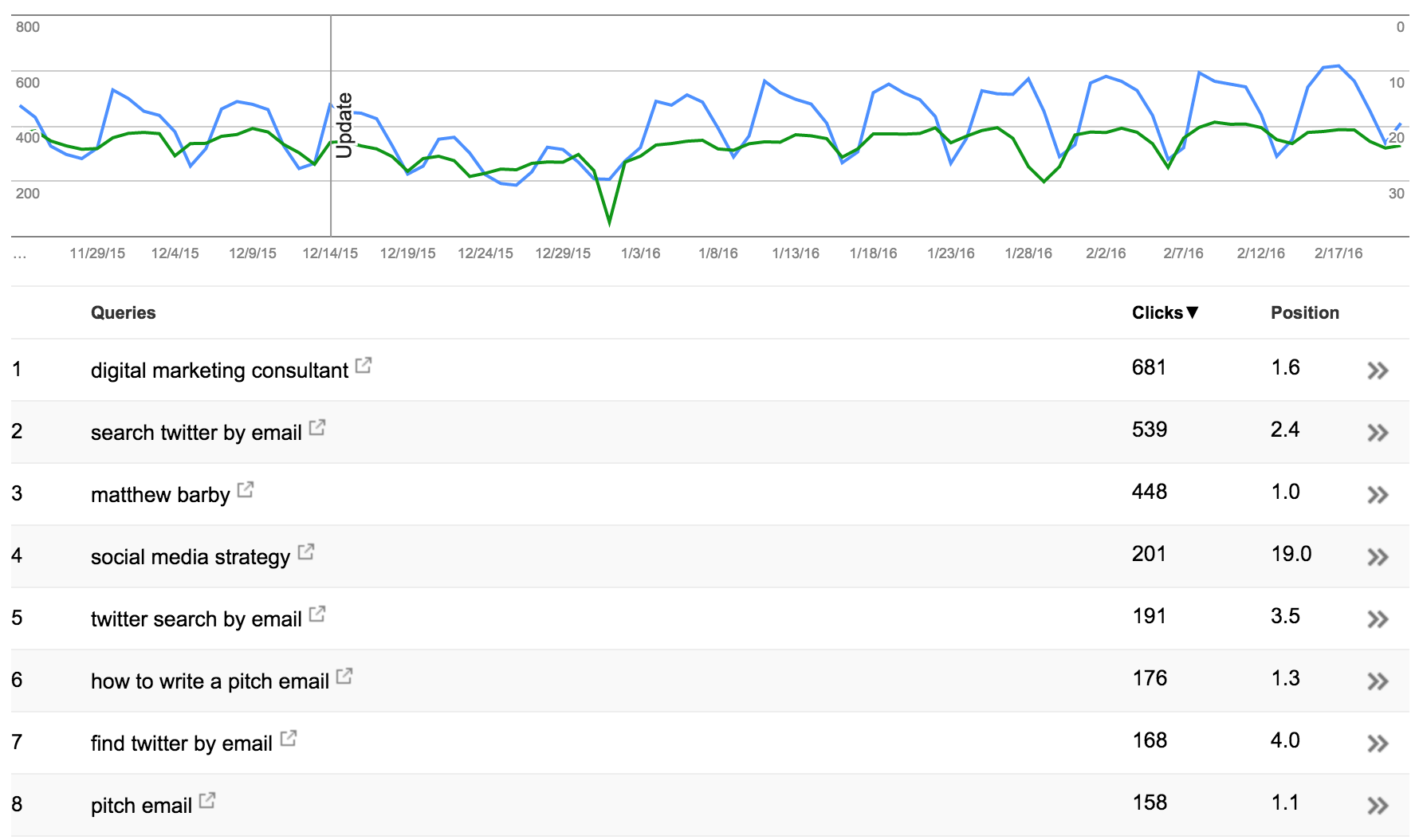
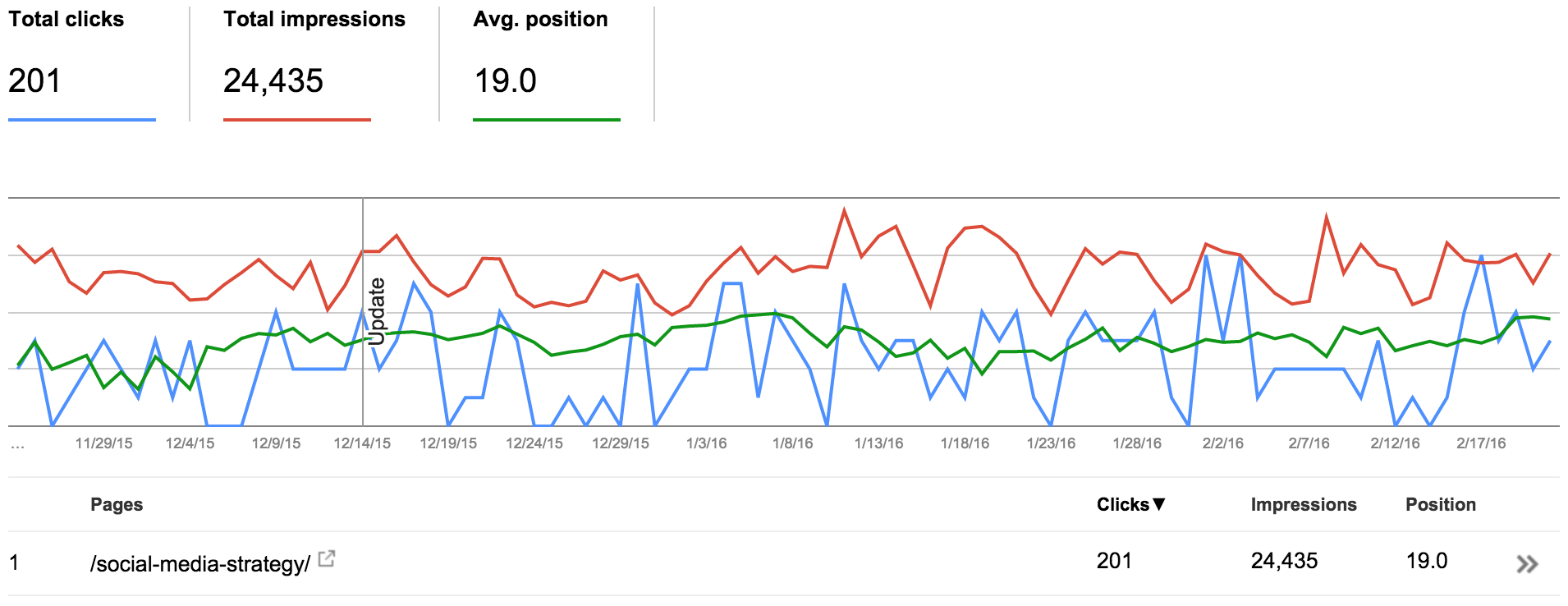
If you select the tickbox at the top to show "Clicks", "Impressions" and "Position", then this will give you data on the keywords that are bringing in the most traffic, the most impressions in the SERPs and then their average position.
The goal is to find keywords that are hovering between position 10 and 25 that you could potentially bump up on to page 1 and dramatically boost traffic.
Once you find a keyword, click through to it and then click on the "Pages" radio button, which will display which page it is that the keyword is ranking for.
The above is an example from my blog where one of my blog posts ranks on page 2 for "
social media strategy".
Step 2: Finding Pages to Push Internal Links From
The next step is that you'll want to find pages where you can drive more internal links through to your 'low-hanging fruit' page with keyword-focused anchor text.
The first step that I take is to do a quick Google search to find pages on my domain where I've mentioned the keyword in question so that I can add an internal link. To do this, I'll use the following search query, replacing DOMAIN with your domain name (e.g. matthewbarby.com) and KEYWORD with the keyword you're targeting (e.g. "social media strategy"):site:DOMAIN intext:"KEYWORD"
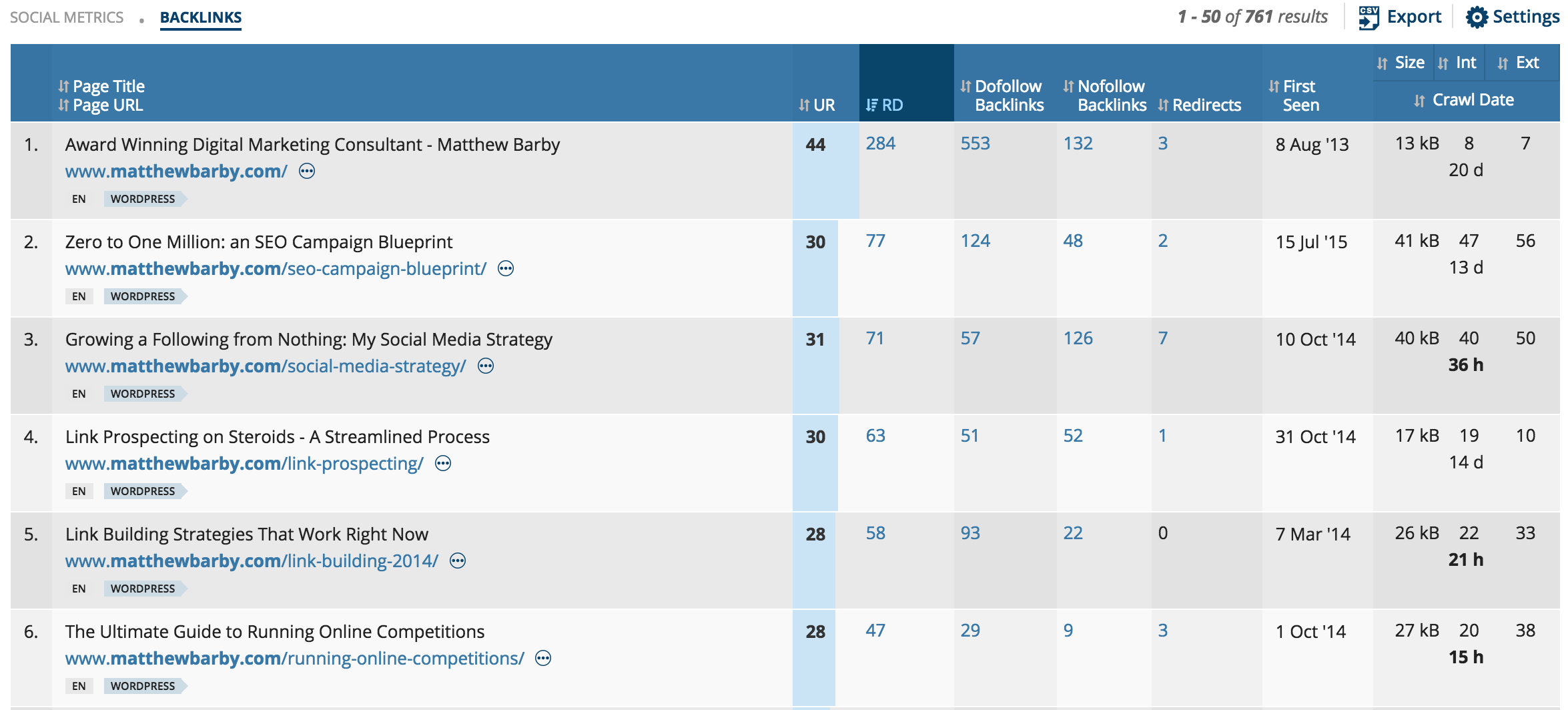
The next thing that you can do is try to add links, where relevant, within some of your most powerful pages on your website. By powerful I'm talking about the pages that have the highest number of external links pointing to them.
You can find this information out by using a link analysis tool like
Ahrefs or
Majestic and then going to their "Top Pages" report.
Once you've added the internal links, go through the copy within the page itself and see if there are any on-page tweaks that you could make. For example, is the keyword within the title tag and the H1, etc.?
Step 3: Track the Results and Scale It
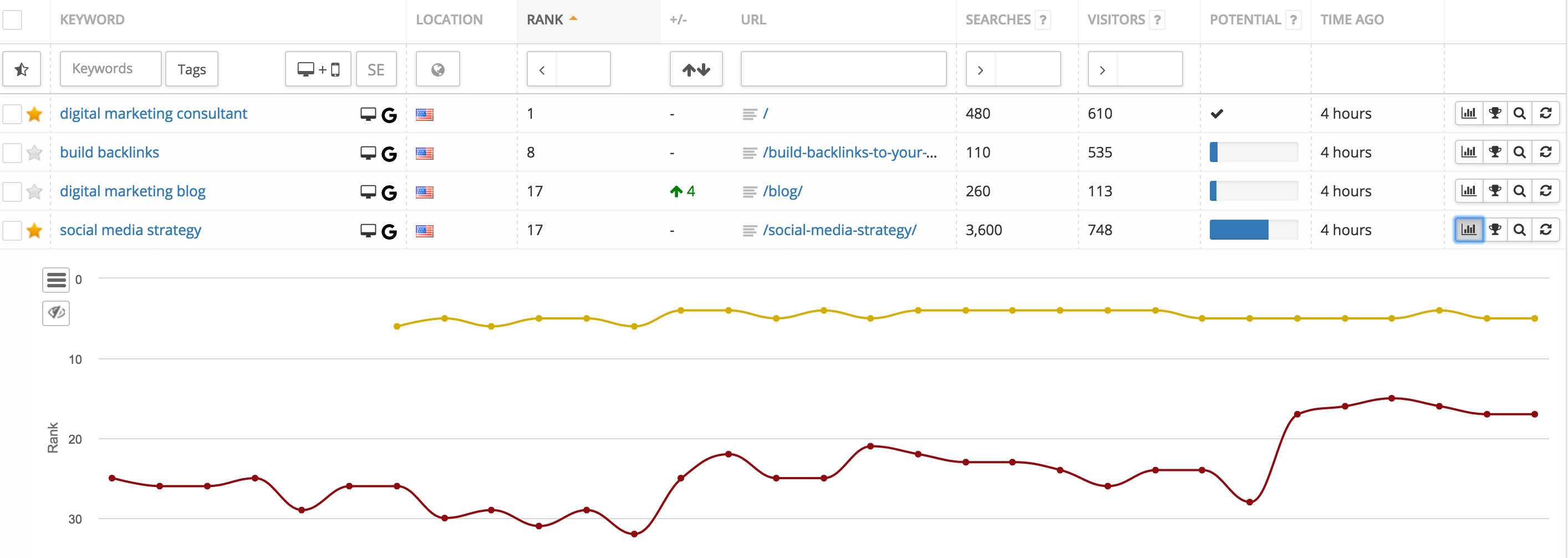
Whenever I do projects like this I keep track of the keywords I'm trying to improve within
Accuranker, a keyword tracking tool.
Simply upload your keywords and tag them accordingly, then you can get daily or weekly reports on improvements. Once you start seeing results from this method, start scaling it up.
6. Competitor Link Analysis
There are a lot of resources out there surrounding
competitive link analysis (and a lot that have been written by me!) but whenever I speak with people that are working on SEO projects, it's always one of those "yeah, I know I should do it more" tasks.
This is the first thing that I'll do whenever I'm mapping out a new campaign, regardless of the size of the project. I've done this within campaigns for local businesses and blue chip companies alike - it works just as well for both.
That's why you should be doing it too!
What Does It Involve?
Compiling a short list of competitors within your industry.
Looking at the websites and specific webpages that are linking to them.
Finding opportunities where you can get similar links.
It's a simple process and it doesn't always take that long, especially once you've done it a few times.
From using simple competitive research techniques I've found tons of link opportunities, including those on top-tier publications. More than anything, the real value comes in the fact that the link opportunities are always hyper-relevant to your business.
How It's Done
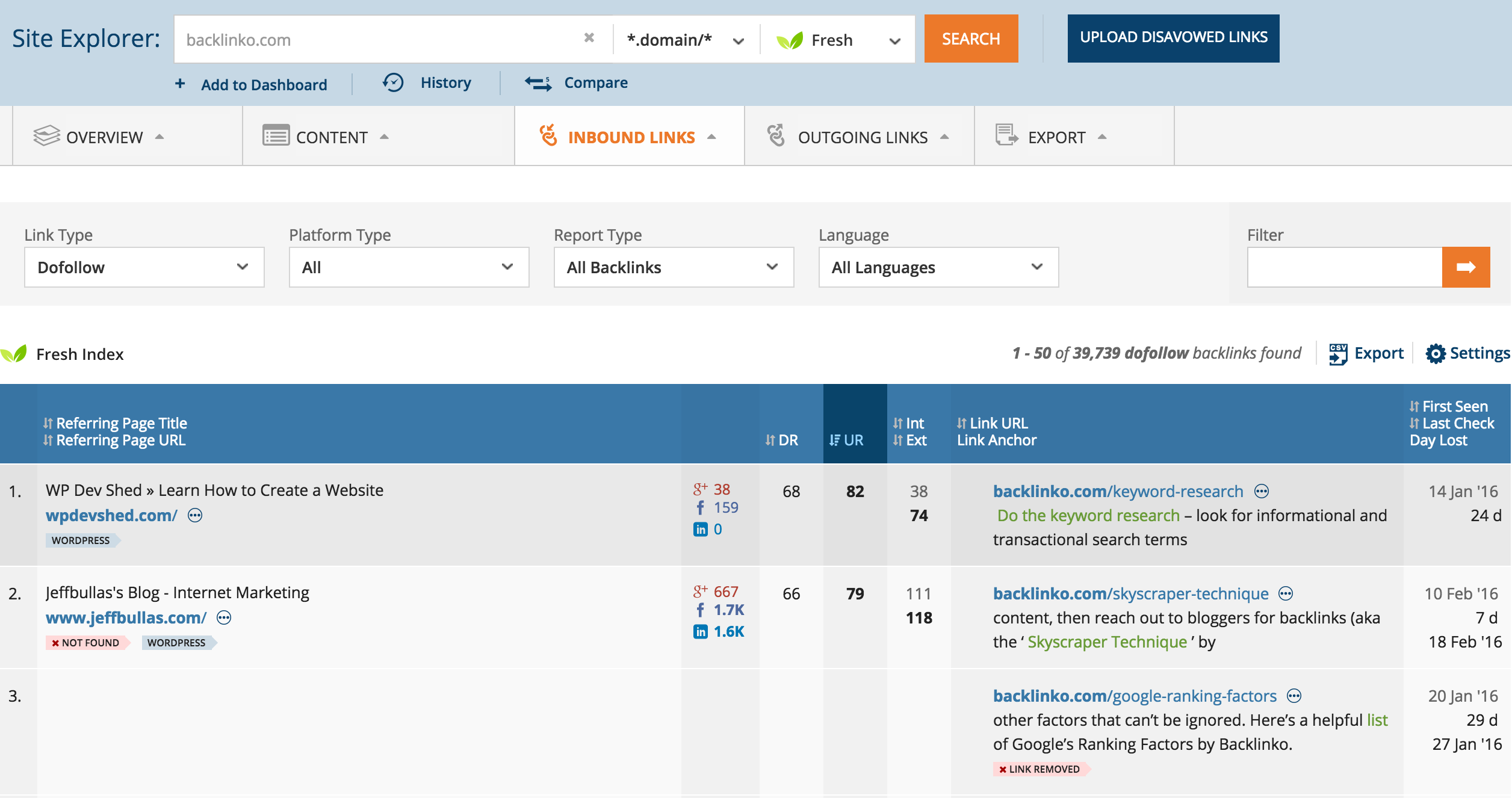
The first step is to use a link analysis tool like Ahrefs, Majestic or Open Site Explorer to get a list of the backlinks for one of your competitors.
In the above example I'm checking out the backlinks from the awesome
Brian Dean's website, which my blog often competes with in the SERPs.
Just by scrolling through the webpages that are linking to him I can see a ton of sites where he's written guest posts. These would be my first starting points - if Brian is writing for them then there's a high likelihood that they'd be interested in having me write for them too, seeing as we cover largely the same topics.
Next up is a Huffington Post link. I'd love a link from the Huffington Post, so I could go through to the article and find out who wrote it. In this example it's
Elena Prokopets. Maybe reaching out to her on Twitter would help me start building a relationship so that I could share some of my content with her?
A few links down and I've noticed that Brian has a link from WordPress.org. Not bad! Turns out that his content has been referenced within one of WordPress's codex posts. If I were to reach out and offer some additional insight, citing one of my articles, there's a chance I could bag a similar link, especially considering they have a 'Useful Resources' section.
These are just a couple of examples of things you can find and then instantly act upon. My advice is to run competitor research on a weekly or monthly basis to find any new opportunities that you can take advantage of whilst the iron is still hot.
Download My SEO Tactics Checklist + BONUS Tools
Get my downloadable checklist with 19 SEO tactics that you can implement today as well as a full bonus list of all the tools that I use to accelerate growth within my SEO campaigns.
Download for Free
7. Find Questions That Your Buyer Persona is Asking
Coming up with good ideas for new content isn't just about finding a keyword relevant to your product and then turning it into a blog post. All of your content should directly resonate with your buyer persona.
Whenever I'm mapping out a content plan I will start by finding out what my buyer persona is asking. From there you can align the questions to topical keywords in order to drive growth, but ultimately you'll be fulfilling your potential customer's needs.
Step 1: Finding Questions Being Asked
There are a number of places that you can begin looking for questions that your buyer persona is asking. My first port of call is
Quora.
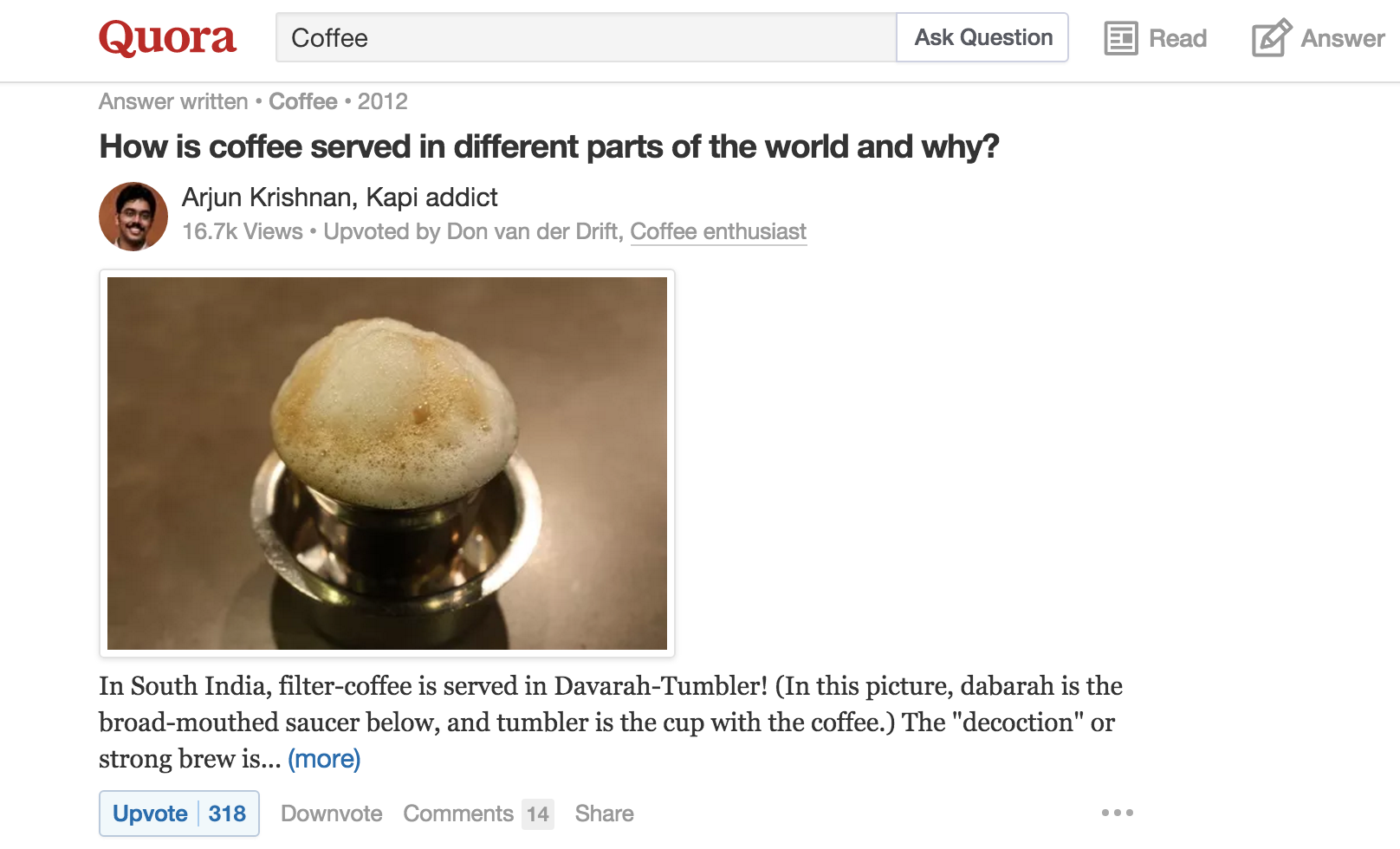
If you don't know already, Quora is a social network all focused on users asking questions and then getting answers from people who have knowledge in a specific area. Using Quora you can go through and search for what people are asking, and then use this information to inform your content strategy.
The above example is one result of many from a search based around "Coffee". Other questions that were asked include:
Is coffee with soy milk vegan?
What are typical coffee shops' margins on the coffee and drinks they sell?
Why should you put instant coffee and water in this order to achieve proper dissolution?
What is it like to be a Starbucks barista?
What is the meaning of "a cup of java"?
Do Nespresso capsules have a beneficial effect to taste or is it just a marketing trick?
If your business operates within the coffee industry, you could use some of the above examples to find out what people who are interested in coffee are asking. This isn't limited to popular topics though; you'll find hundreds of thousands of questions on Quora covering a wide variety of topics.
Another favourite tool of mine is
Answer The Public.
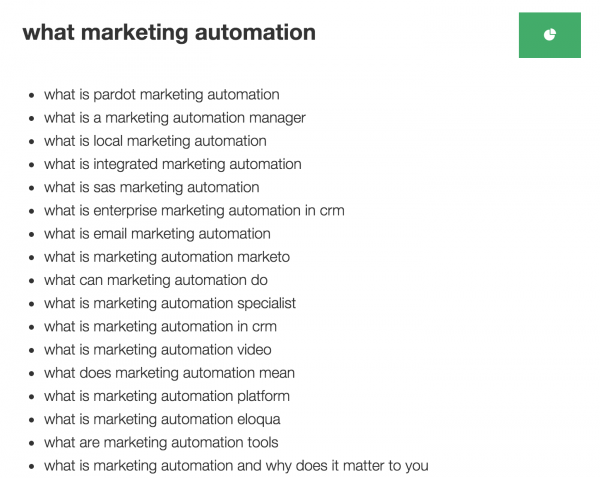
Answer The Public is a question-based search engine. You type in a keyword relevant to you and it will find what questions people are searching for around that term. The above example is for a search of "Marketing Automation".
It will even give you the option to download a visual map for the search query to show a range of question variations. Not only that, but it's a free tool.
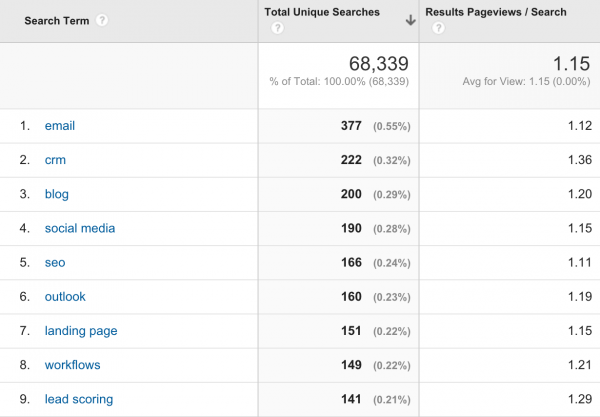
The third route that I will go down is using data from internal searches within my website. You can actually get this data from within Google Analytics - here's
how you can set it up.
Your internal site search data can often lead you to understanding what your users want more information around and what questions they have.
Step 2: Aligning Questions to Keywords
For each of the questions that you've found you'll want to see if there is an opportunity to align them with a keyword that could bring through organic traffic to your website.
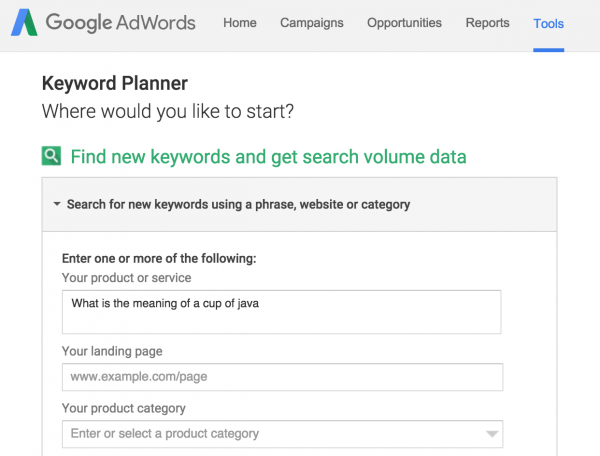
To do this, start by dropping the question into
Google Keyword Planner:
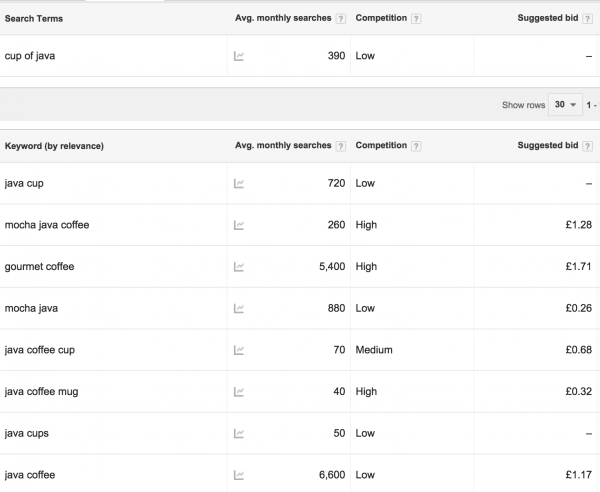
A lot of the time you won't get any meaningful levels of searches each month for your whole questions - as you can see below:
If you check out some of the suggestions below this though, you're likely to find some opportunities. You can also plug in a few variations of the question to find some search volume; for example, I could search for "cup of java" instead of "what is the meaning of a cup of java" and I'll get a number of keyword opportunities that I can align to the question.
There are a few opportunities from that search, including "cup of java", "java cup" and "java coffee" that have at least a few hundred searches each month.
Step 3: Aligning Questions to Content
Once you've got a question and a target keyword, all that needs doing now is to provide an answer in the form of a piece of content.
You can get creative here, but try to ensure that you're including your keyword within your content title as well as remaining focused on answering the specific question that your buyer persona originally had.
A few example content ideas could be:
Tracing the roots of the 'cup of java'
What's a 'cup of java' and why should you have one once a day?
Coffee Basics: what does a 'cup of java' mean?
You can see where I'm going here. Once you start building out a range of questions and keywords, you can both qualify the demand for the content through search volume and validate the idea based on your persona research.
8. Transcribe Your Video Content
Video content is a great way to drive engagement from your visitors. Facebook users are now watching
over 100 million hours of video per day on the social network alone, and video is becoming an increasingly cost effective format for advertisers.
From an organic search point of view, video has a few issues, especially if you're not hosting your video content through YouTube. The biggest problem is that search engines can't understand the content within video (
yet).
One way to maximise the amount of keywords that your video content can rank for is to create full text transcripts to accompany them.
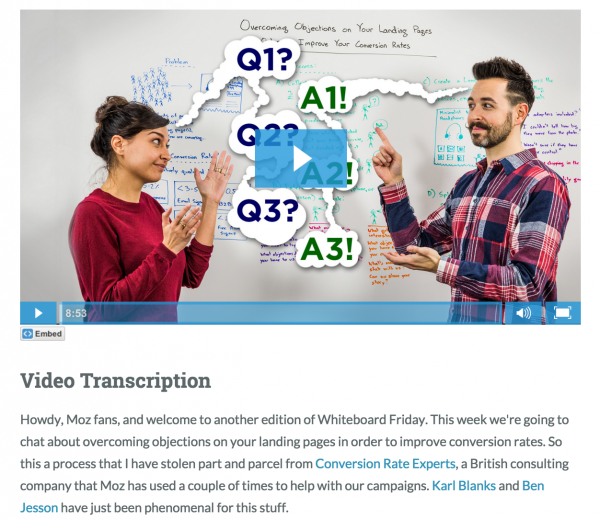
I really like how Moz do the transcripts of their '
Whiteboard Friday' videos. They don't just paste a load of text below their video; instead they add useful links, intersperse the text with imagery from within the video and add in some extra info that the video doesn't mention.
It's not just benefitting SEO, but it's also improving user experience.
If you're looking for a cost-effective but good quality service for getting text transcriptions done then I'd recommend using
SpeechPad. I've used this platform for a few years now and have always been happy.
It's worth mentioning here that you can also use the transcript for closed-caption subtitles (which is ideal if you're advertising the video on Facebook).
9. Get a Column on an Industry Publication
One-off guest posts are good and can be useful for driving traffic to your website, but having an on-going writing gig for an industry publications will seriously benefit you in the long term.
Not only are you building your name within the industry, but you're also creating a relationship that you can regularly tap into to promote new content on your own website and bring through a steady flow of relevant backlinks.
Step 1: Finding Publications to Write For
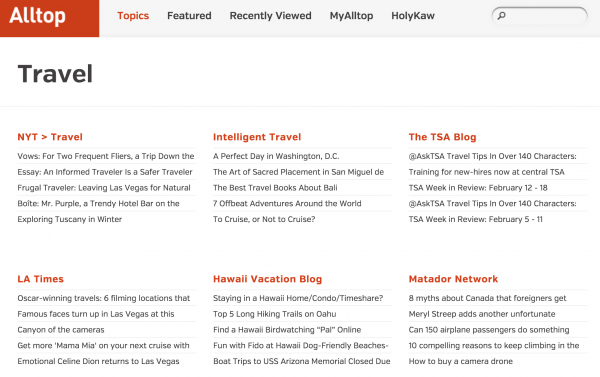
One of the first places that I look is on
AllTop.com.
All you need to do is search for a keyword relevant to your industry and you'll get a list of the top publications and blogs relevant to you.
From here I tend to add the list of relevant blogs into a spreadsheet so that I can do some further analysis into them.
Step 2: Finding Opportunities
For each of the websites you've got in your list you'll want to find out whether there's an opportunity to become a columnist there.
To scale this quicker, you can use the following search query within Google. Just replace DOMAIN with the domain name of the website:site:DOMAIN intitle:write for us
This should give you a quick idea of whether they have a page on their site that gives details on how you can apply to become a writer.
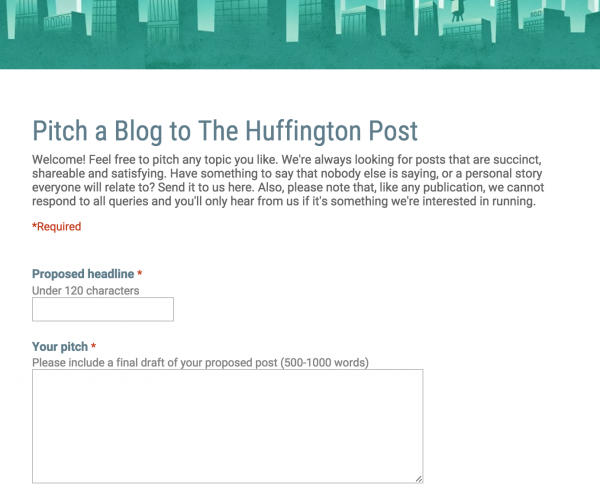
Some sites, like
the Huffington Post, will ask you to pitch an idea to them first. This is a perfect entry point to show your worth in order to request something more on-going.
Step 3: Making Contact
Once you have some websites in mind that you'd like to write for, you'll need to pitch yourself to them. Before you go ahead and start emailing them, do the following:
Get your LinkedIn profile up to date and mention any places where you've published content previously.
Leave a few detailed comments on some articles within the website you're pitching to (this makes a good conversation piece).
Share some relevant content from your Twitter account and mention in your bio that you're a writer/columnist.
If possible, create a portfolio on your website (or elsewhere) that showcases other content you've written.
Once you've done this, here's a good email template that you can use. Just make sure that you personalise it for each publication that you get in touch with:
Subject: Columnist for {{Publication Name}}
Body: Hi {{First Name}},
I hope you’re well.
I’m just getting in touch because I’m a reader and regular commenter on {{Publication name}}. I’m the {{Job title}} of {{Company name}}, {{On-line Description of Business}}.
I’m looking to further build my reputation within the industry by writing for a select few key {{Industry type}} publications (hence why I’m getting in touch with you).
Currently, I’m a regular contributor to {{Website Name}} and the {{Website Name}}, amongst a few others (including my own blog – {{URL here}}) and it would be great to partner with {{Website Name}} to become a columnist.
You can check out my full credentials on my LinkedIn page (I sent you a connection request today) – {{LinkedIn profile URL}}
Here’s an example of some recent articles I’ve written:
URL of an article written by the individual
URL of an article written by the individual
URL of an article written by the individual
I’ve had {{X Number of Years}} experience within the {{Industry type}} industry, so could offer a lot to your readers. Alongside this, I’d be happy to meet any deadlines that you put in place.
Let me know if you need any more information.
I look forward to hearing from you.
{{Signature}}
10. Update and Republish Old Content
If your blog lists your individual posts in order of the date that they were published, like most blogs do, then the older your blog post gets, the lower down the website architecture it goes.
In general, the higher up the website architecture a page is, the more powerful the page is. This is the reason why the homepage of most websites is usually the most powerful.
As your blog posts get older, they go deeper into the architecture of your website because you'll have to go to page 2, 3, 4 or more of your blog feed to find them - and Google has to do the same.
A nice little hack that I regularly use to boost some of my older content is to update an old post with some extra content and swap around any old references, then I'll change the date of the post to the current date and republish it.
Two things happen here...
You've added more relevant content to your blog post and increased the on-page SEO targeted against your focus keyword(s).
You've just pushed the blog post a few levels higher in your website architecture because it'll now be on page 1 of your blog feed.
This is something that we're regularly doing at HubSpot and we have seen some
amazing results.
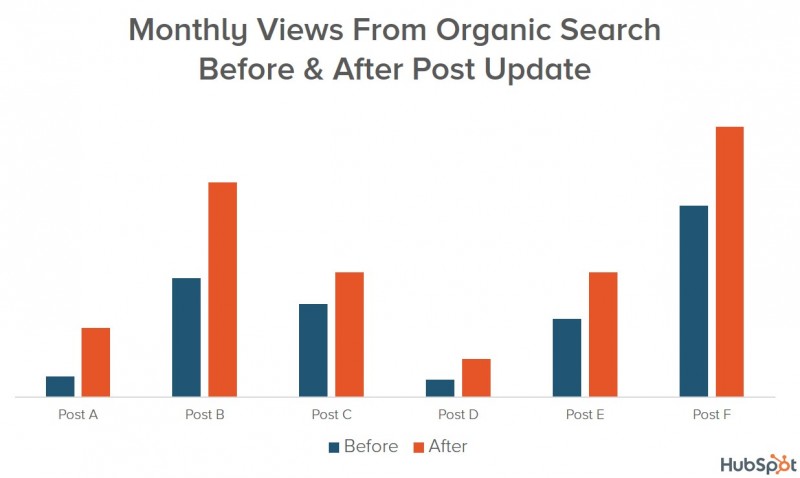
The above graph shows the impact across a test with 6 different blog posts.
Considering the effort vs results here, I'd highly recommend that you try this out, especially if you have a lot of existing content on your site.
11. Run Co-Marketing Campaigns
"Co-marketing is when two companies collaborate on promotional efforts for a co-branded offer. In a co-marketing partnership, both companies promote a piece of content or product, and share the results of that promotion." (
Amanda Sibley)
Co-marketing is a seriously powerful way to tap into audiences larger than just your own to drive leads, links, social engagement and more. It's not just reserved for big brands either.
BuzzSumo and Moz executed
a great co-marketing campaign back in September 2015 where they analysed one million articles to discover what content was getting shared and linked to the most.
They offered a 30-page report with the full results of their study that was available for download via a landing page on the BuzzSumo website. To promote the content, each brand published a blog post, shared it on their respective social media accounts and fired out an email to their subscribers.
The knock-on effect of increased sharing amongst both of their combined audiences means that they'll reach an even larger group of people than their combined following. The collective data that's been gathered can then be shared amongst both brands and used to drive more sales.
I've run tons of co-marketing campaigns in the past, and it's not always just about having a large audience to share. That certainly helps, but if you've got some original data or insight that you're willing to co-brand with another company, you have an opportunity to run a co-marketing campaign.
Some examples of ideas for running co-marketing campaigns can include:
A joint case study
Report based on original data from each brand
Charitable causes
Events (e.g. co-branded local meetup)
Incentive or awards campaign
Joint webinars
Online courses/training
12. Consolidate Cannibalising Content with Redirects
The concept of cannibalising content is something that a lot of people struggle with. To makes things a little easier to understand, I'm going to give you an example...
Ok, so you've got two pieces of content and they're covering a relatively similar topic. Let's just say that these are the titles of the two content pieces:
Understanding The Healing Properties of Herbal Tea
17 Ways That Herbal Tea is Good for You
In this example, the big keyword that you could be focused on ranking for is "Herbal Tea", which is searched for 22,200 times per month.
In this example, article 1 ranks number 5 on page 1 of Google for "Herbal Tea", whilst article 2 ranks at the top of page 2.
If I were to ask you which you would rather have:
Both article 1 ranking #5 and article 2 ranking #6 at the same time on page one.
Article 1 ranking #3 on page 1 and article 2 not appearing in Google at all.
A lot of people would choose option 1. I mean, it's better to have more real estate on the first page of Google rather than jump two places and lose a whole other listing, right? Wrong.
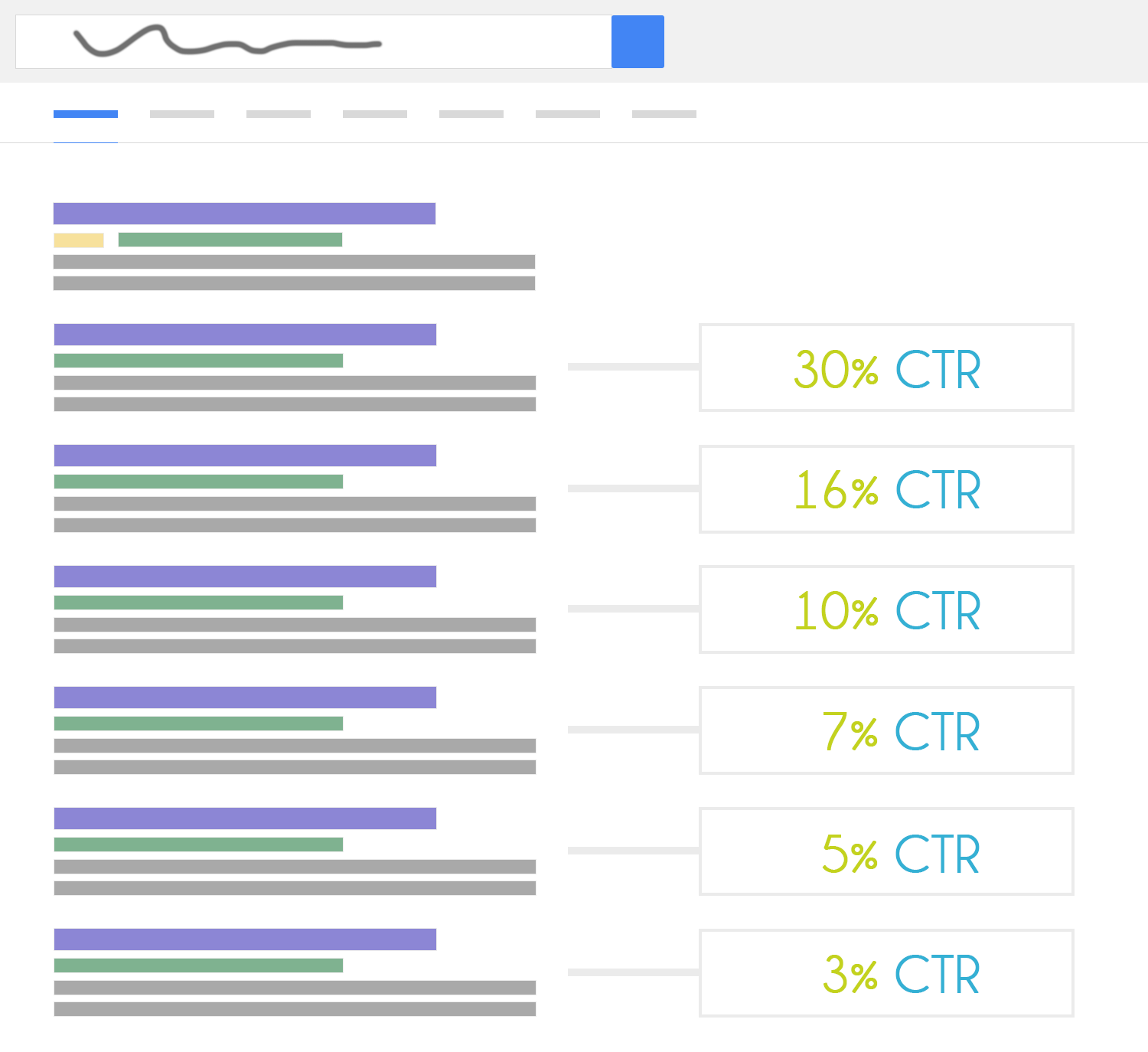
If you take a look at the image above then you'll see the breakdown of the average
click-through rate by position on page 1 of Google.
Using the "Herbal Tea" example, we could estimate the following amount of traffic each month for each of these positions (based on 22,200 searches per month):
6,660
3,552
2,220
1,554
1,110
666
If we ranked at both positions 5 and 6 we could expect a total of 1,776 monthly visitors. Now, let's compare that to losing article 2 completely and just having article 1 rank at #3: 2,220 monthly visits.
That's a 25% increase in visits.
When to Consolidate Content
As I've explained above, it's better in terms of traffic generation to have one higher ranking piece of content than two lower ranking pieces. As well as this, you've got to take into account that to rank two different pieces of content you're going to have to spread your resources across two different assets.
Consolidating two pieces of content together by adding a 301 redirect to the lower-performing piece is often an incredible simple and quick SEO win that you can implement.
One of the main reasons why you'll see a boost in rankings is because any links that go through to your underperforming piece of content will now redirect through to your higher-performing content, adding to the existing links it already has and making it more authoritative in the eyes of Google.
That said, this isn't a decision you should take lightly.
Whenever you're evaluating whether to consolidate an underperforming piece of content, you'll want to dig deeper into the following:
How old is the content? If you've only recently published it then you may need to give it time to see how it performs before jumping to conclusions.
Does it bring through traffic outside of organic search? Maybe the content brings through a lot of referral traffic or traffic from social media, so you could end up losing out on some valuable traffic by consolidating it.
Is the content ranking well for other keywords? Outside of the main keyword you're looking at, does the content rank well for other keywords that bring through traffic? If so, you may need to reconsider.
Are there any other uses for the content? Is this piece of content converting much better than your main traffic-driver? Is this more of a brand-level/educational piece that adds more value to your buyer persona?
Make sure you thoroughly evaluate all of the above areas before rolling out any redirects.
13. Link to Influencers Within Your Content
Contrary to popular belief, linking out to relevant external websites
does not directly impact your search rankings.
That said, linking out to content written by influencers within your industry can help to get your content shared. This is something that I have done for years and continue to do in order to increase the conversion rate of my outreach emails.
In fact, I've even used this technique to start building relationships with niche influencers where I can then go on to work with them on things like co-marketing campaigns or to line up guest posting opportunities.
The typical process that I follow to get the most from this is as follows:
Compile a list of influencers relevant to my content that I'm creating.
Find specific resources from each influencer that I can link out to.
Gather social media accounts and email addresses for each influencer.
Publish my content with links to resources written by influencers.
Reach out to each influencer via email to let them know they've been featured.
Mention them in a tweet with a link to the content or tag them in an image within the tweet.
This simple process dramatically increases the likelihood that people will share your content. Another thing that I like to do is ask influencers to upvote my content within influencers that I've shared to in order to get trending and drive more traffic.
14. Build a Linkable Asset
Links are still the most important thing to have in order to rank for competitive keywords. This is even the case for huge authority sites, like HubSpot.
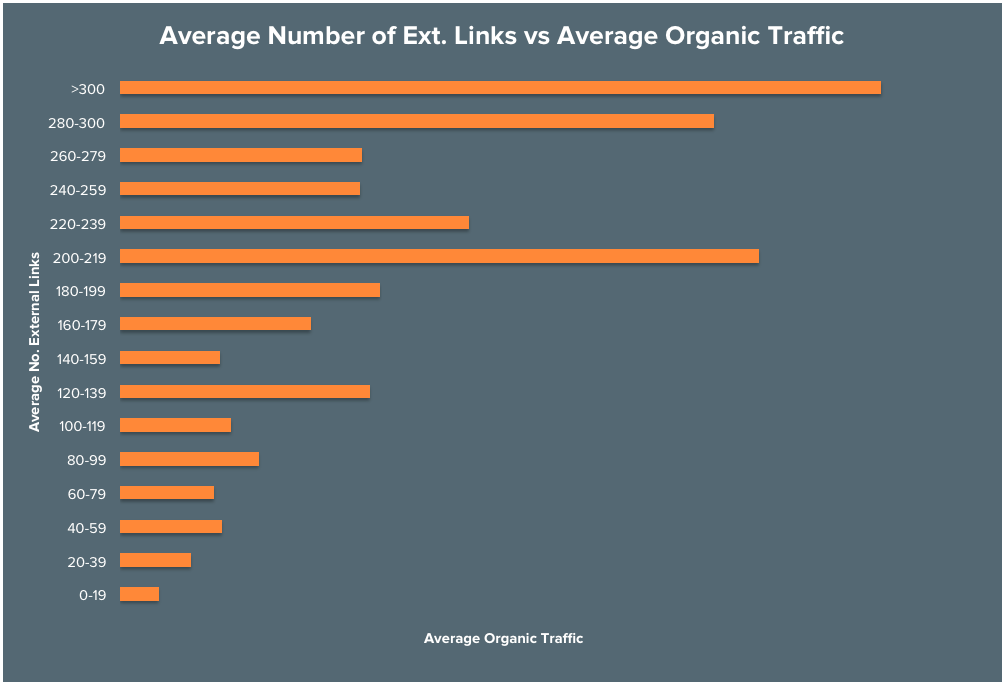
The above chart is from
a study I did into the HubSpot blog. It shows huge positive correlation with the number of backlinks a URL had and the volume of organic search traffic it generated.
In short, even for websites that have tons of links pointing to their domain, they still need to earn links to their individual pieces of content to rank well.
The only problem is, earning backlinks is difficult.
One way to rank for more competitive search terms is to build out highly-linkable assets that are either geared towards ranking for that keyword or to passing internal links to a different piece of content that you want to rank.
Step 1: Who Would Link to You?
Before you start building some useless infographic that bears absolutely no relevance to your brand, take a moment to think about who would possibly link to this?
In a lot of cases, this may not actually be your buyer persona. If your buyer persona has the ability to link (i.e. they have a website and would actually mention your content and link to it) then you may be able to get even more bang for your buck, but in a lot of cases it will be someone slightly different to the people who will buy from you.
Usually, the big links you can go after will be from publishers (both editorial publications and blogs, for example). For instance, you may be creating a data visualisation of the average salaries for individual states in the US. This kind of content is a prime target for being picked up in the Wall Street Journal, et al.
In fact, here's
an exact example of that in action (with a link from WSJ and many more!).
It's also worth managing expectations here. Setting yourself the goal of getting links from WSJ is about as tough as it gets. If this is your first time doing this, set the bar a little lower and work your way up.
Step 2: Conceptualising an Idea
I always start this process by looking at what kinds of ideas are working well within my industry.
Go through and use a tool like
BuzzSumo and find popular content within your industry or around a topic related to your business.
Taking a look at top-performing content can give you ideas on specific angles you can take as well as how to format your content. Just make sure that you start with a good idea before you decide on the format. I see too many people start their idea process by saying, "I want to create an infographic".
Creating an infographic isn't an idea - it's a format.
Step 3: Deciding on the Format
One way of differentiating your idea from another is to do something a little different with the way you format it. Just make sure that you're appealing to the people that are going to link to you.
Here's a list of a few different content formats that you could explore:
Text articles
Infographics
Videos
Mobile/web apps
Interactive guides
Tools/software
Quizzes/surveys
eBooks
White papers
Memes
Reviews
Charts
Lists
Case studies
Interviews
Checklists
FAQs
Tutorials
Podcast
Illustrations
Webinars
Bookmarklets/browser extensions
These are just a few ideas that you could look at.
Step 4: Make Sure You're Solving a Problem
This is always a bit of sense-checking that I tend to do when creating something big. I ask myself whether I'm actually solving a problem that someone who could link to me has.
Let me give you a couple of examples...
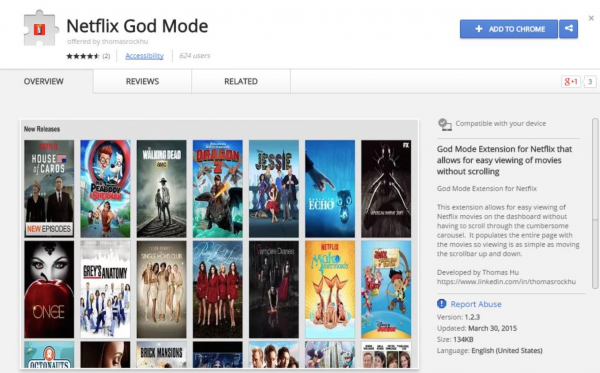
Example 1: Netflix 'God Mode' Bookmarklet
Problem: "Our target market watch Netflix, but they hate the interface."
Solution:
Netflix God Mode
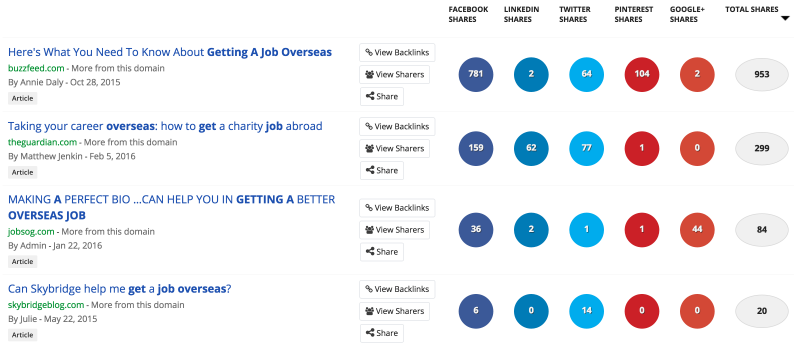
Stats: 482 links from 191 websites, including CNN and Huffington Post. Top 10 in Product Hunt and over 600 social shares.
Example 2: Buy vs Rent Calculator
Problem: "Our target market has issues with understanding what the best approach is for moving into their first home."
Solution:
NY Times
Stats: 296,000 backlinks from 2,440 websites. Over 90,000 social shares.
15. Press Request Alerts
Press requests are an absolute gold mine for earning high-value links. A lot of people can be put off by them due to the amount of time it can take each day to go through them all, but they're probably not hacking the process like I do!
In short, press request alerts are requests for sources of information from journalists. Let's say you're a journalist putting together an article on wearable technology for The Guardian. Perhaps you need a quote from an industry expert or some products that you can feature within your article? Well, all you need to do is send out a request to a press service and you can wait for someone to get back to you.
All you need to do is get these requests sent to your inbox and then respond. A couple of years ago I replied to a request from a journalist at The Guardian and
bagged a link from their website. It took me less than 2 minutes to respond.
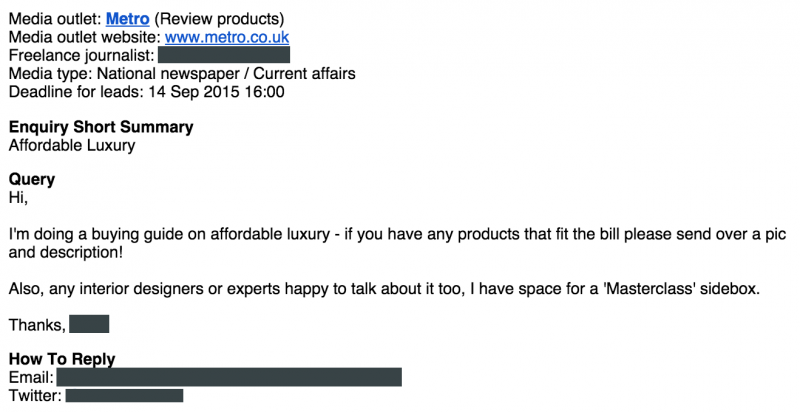
Here's an example of what a typical request can look like:
It's honestly as simple as responding to the email.
Step 1: Sign Up for Press Request Alerts
The first step is to sign up for a service that sends you alerts from journalists. There are a lot of them out there and each have their own pros and cons. Here's a list to get you started:
HARO (one of the most popular free services)
ResponseSource (paid service aimed more at the UK)
Muck Rack (paid service)
Gorkana (paid service)
Source Bottle (free service)
Press Quest (UK free service)
NARO PR (free service)
#JournoRequest (Twitter hashtag used by journalists)
#PRrequest (Twitter hashtag used by journalists)
Step 2: Organise Your Inbox
You're going to get a ton of emails each day with requests from journalists. Just one of these services will fire between 50-100 requests per day, so make sure you're ready for it.
To get things in order, this is the process that I take with my email inbox:
Create individual folders within your inbox for each of the different services you've signed up for (e.g. ResponseSource, HARO, Muck Rack, Source Bottle, etc.).
Create rules for any new emails from each of these services to go into their respective folders (here's how for
Outlook and
Gmail).
Create sub-folders underneath each main folder that are broken down into different topics. For example, I have folders marked as Growth, SaaS, SEO, Startups, etc.
Create further rules on any of the emails you receive that include keywords related to each topic to be filed under the relevant sub-folder. For example, any request mentioning SaaS will go into my SaaS sub-folder.
The final thing that I do is create rules on any of the emails from these services that will flag an email that comes through from a publication that I’m targeting. In my case, I have alerts for any press requests that come through from Forbes, Entrepreneur, Wall Street Journal, and a few others.
Pro Tip: Get SMS Alerts
The quicker you respond to high-value requests, the more likely you are to be featured. For really high-value requests, you can use
IFTTT to send you an SMS whenever a request comes through fitting a specific criteria.
I created
an IFTTT recipe that sends me an SMS whenever a request around SEO is sent to me. You can edit this recipe to suit your own needs.
Step 3: Responding to Requests
The key here is to keep this concise and to the point.
Here's an email template that I use, but you'll need to personalise it accordingly:
Subject: HARO: {{Insert the subject that the reporter has asked you to comment on}}
Body: Hi {{First Name}},
My name is {{Your name}}, {{Your job title and company}}. Here are my answers to your questions:
One or two sentences (max) with a comment related directly to the reporter’s question.
One or two sentences (max) with a comment related directly to the reporter’s question.
One or two sentences (max) with a comment related directly to the reporter’s question.
One or two sentences (max) with a comment related directly to the reporter’s question.
Let me know if you need anything else.
{{Signature}}
16. Create an Expert Roundup
Expert roundups seem to be everywhere these days. In all honesty, I'm a little fed up with them because most of the time they're full of responses from people who aren't even knowledgeable on the topic.
That said... they're a great tool for building relationships with influencers.
From my experience, expert roundups don't convert very well and they don't tend to earn many links. On the flip-side, they get shared pretty heavily on social media. This is mainly down to the individual contributors to the post sharing with their network.
Instead of creating expert roundups to drive social engagement, links and leads, I use it for a different purpose:
Relationship building.
Let's say you want to get your content linked to or shared by an influencer within your influencer; just sending them a cold outreach email to ask them to do it is likely going to result in a very low conversion rate. On the other hand, if you have an existing relationship with that person, you may see better results.
This works particularly well for lining up guest blog opportunities.
The typical process that I follow is:
Gather a list of influencers I want to form a relationship with.
Reach out to them to take part in an expert roundup by answering a simple question.
Touch base with them via email when the post goes live and sign off by asking if I can keep in touch with any future projects.
Reach out to them again in a few weeks to ask what I really want (guest post opportunity, etc.), thanking them again for contributing to the previous expert roundup.
I guarantee that this will improve your outreach results.
Download My SEO Tactics Checklist + BONUS Tools
Get my downloadable checklist with 19 SEO tactics that you can implement today as well as a full bonus list of all the tools that I use to accelerate growth within my SEO campaigns.
Download for Free
17. Build Your Content in Topic Clusters
Before I get into the details of this, let me explain what a Topic Cluster is:
"A topic cluster is a collection of semantically relevant content that individually cover smaller themes within an overarching topic."
Let me explain this with an example so it makes a little more sense...
Let's say that the main topic that you're talking about revolves around Workout Routines. Within your website you have a number of articles that could fall under this topic cluster; for example:
11 of the Best Ab Workouts for Men
Body-Shredding Spring Workouts
Building Muscle with a 5x5 Workout
27 Fat-Burning Workouts for Women
Having large groups of content that all revolve around the same topic will build more relevance around keywords that you're trying to rank for within these topics, and it makes it much easier for Google to associate your content with specific topics. Not only that, but it makes it much easier to interlink between your content, pushing more internal links through your website.
Building topic clusters within your domain is becoming more and more important from an SEO point of view. The above diagram shows a topic cluster for SEO. This is the way that I build out my editorial calendars to ensure that I'm building relevance towards each of my core topics.
Using this basic approach, I've been able to rank for large numbers of highly relevant keywords that bring through valuable traffic to my site.
18. Seeding Promotion on Big Content
One mistake that a lot of people make when they're planning for the launch of a big piece of content is that they rely too heavily on the quality of the content earning it coverage organically.
Whenever I launch a big piece of content (this one included), I make sure that I'm seeding the promotion myself to give it the best possible chance of going on to perform well organically.
To do this, I often align the launch of my content with a couple of guest posts on relevant websites to drive a load of relevant traffic to it, as well as some relevant links. This has a knock-on effect toward the organic amplification of the content and means that you at least have something to show for the content (in terms of ROI) if it doesn't do as well as you expect organically.
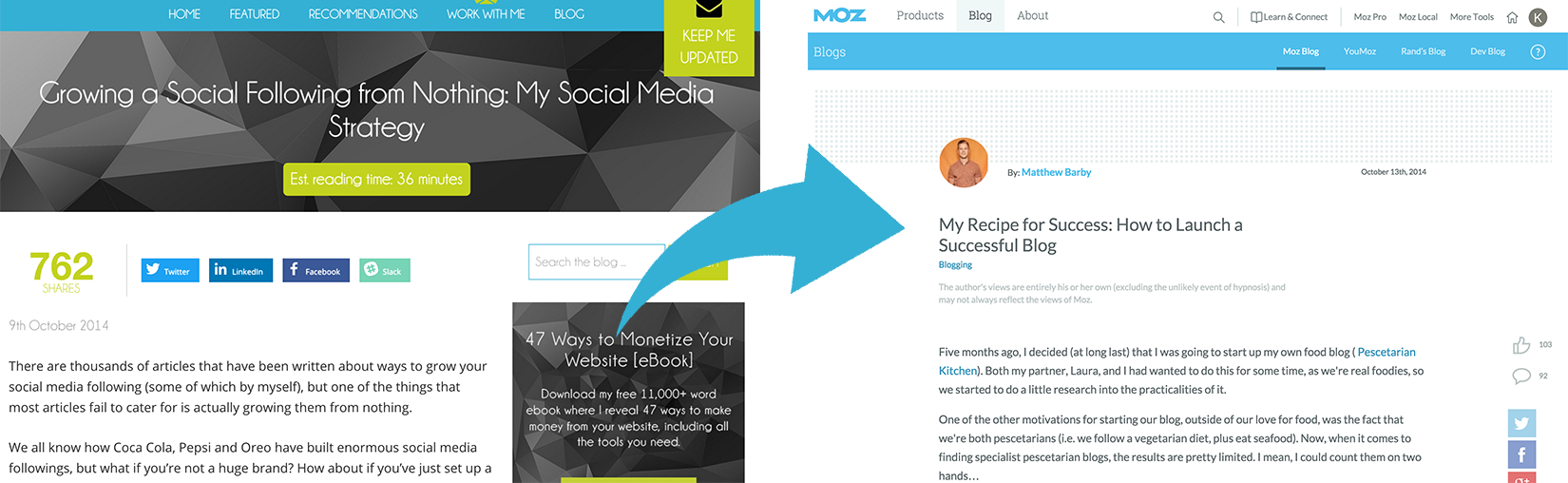
An example of where I've done this on my blog would be when I put together a blog post outlining a
social media strategy that I implemented on a side project that I was running.
Before I went live with the post I wrote up
a case study around the same project that leaned heavily on the information that I explained within my blog post. I sent this to Moz for them to publish on their blog four days after I went live with my post.
Not only did this give a second influx of traffic from the launch of my blog post, but it also helped it gain a number of high-value links and social shares.

As a result, my blog post ranked for some highly competitive terms from an early stage and continues to bring through valuable search traffic and new links each month.
19. Get Product Reviews Using Influencer Platforms
If you're marketing a product or range of products, you may be able to utilise influencer platforms to link up with bloggers that can promote you.
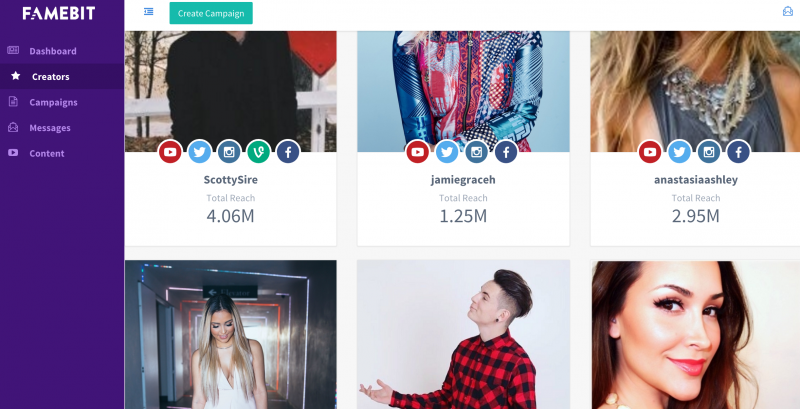
Two examples of these platforms are
Famebit (above) and
Tomoson.
Both of these platforms enable brands to go through and find influencers to work with to promote their product range. I've personally used these platforms in the past to team up with bloggers to get some video and photo content produced and published that ended up generating a ton of traffic.
Depending on how influential the person is that you're working with, the price can vary. I've paid as little as $100 for a campaign, but I've also worked on projects where we've spent WAY more than that. The good thing here is that there's often a range of different people you can partner with that will fit your price range.